
 receive our newsletters
 join Friends of FPMT

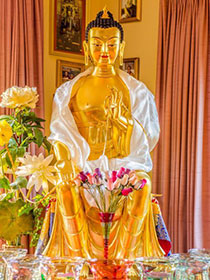
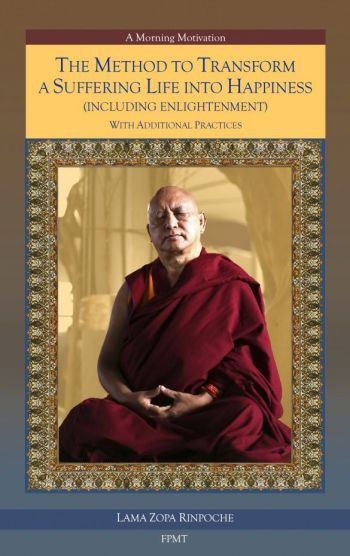
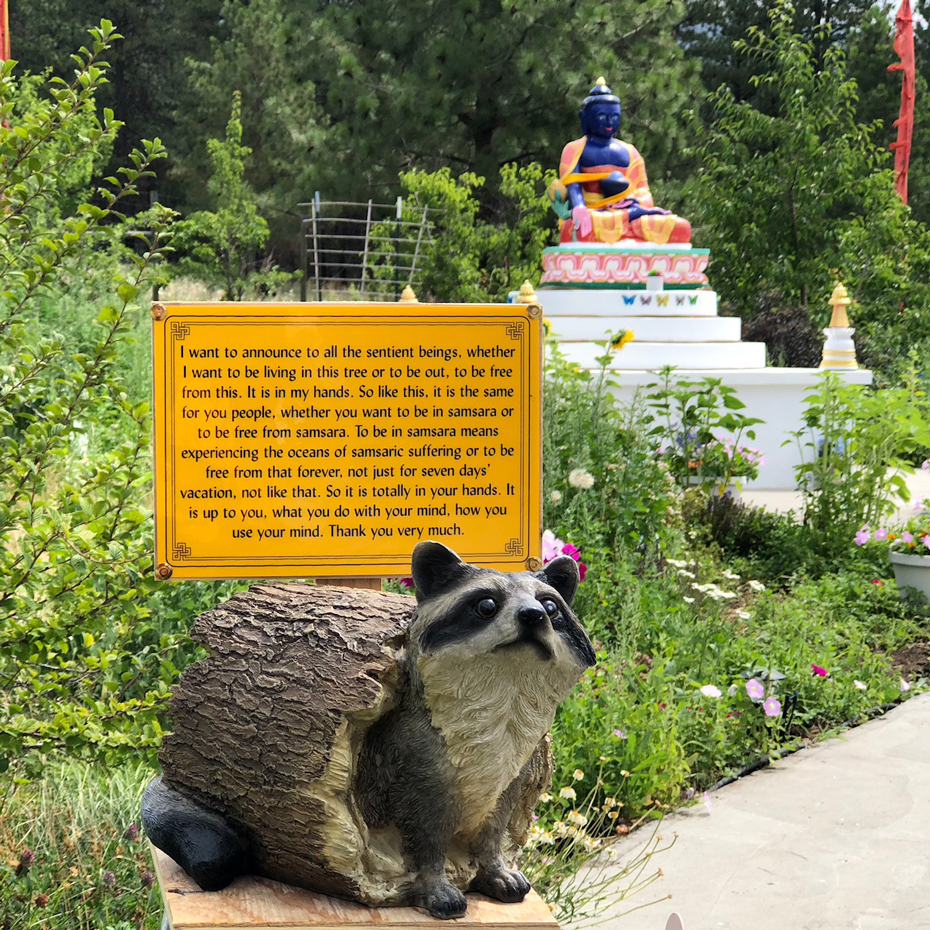
Buddha Amitabha Pure Land, Washington, US, September 2018. Photo by Ven. Roger Kunsang.
Lama Zopa Rinpoche’s care for animals is well known. What’s perhaps less well known is Rinpoche’s creative whimsy with animal statues and the signs he has created for them.
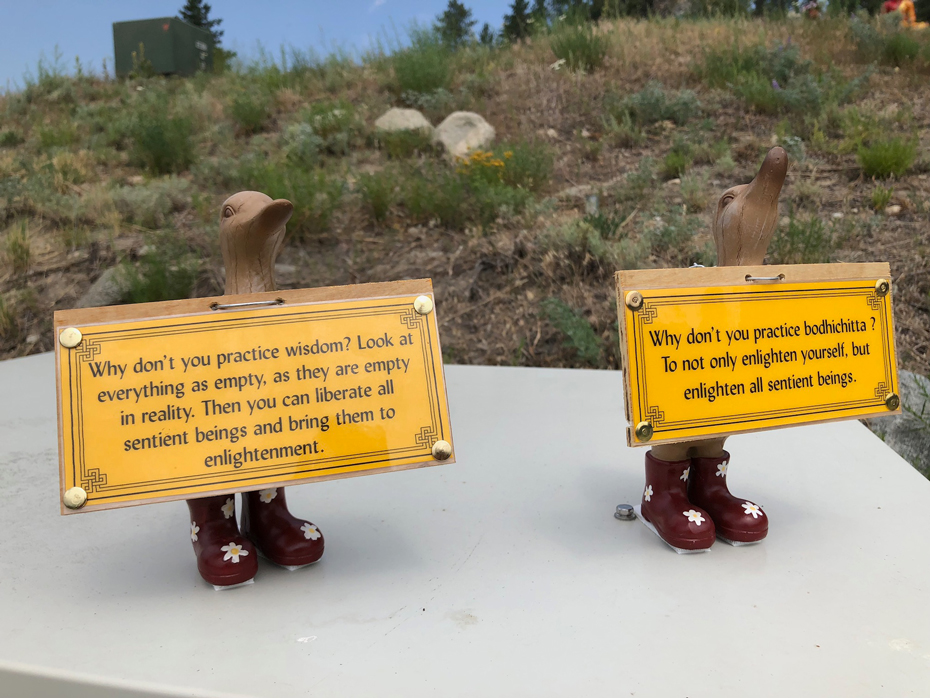
At Buddha Amitabha Pure Land, in a remote part of Washington State in the US, Rinpoche has many animal statues placed on the property with signs that share thoughts about practicing lamrim, or the graduated path to enlightenment.

Lama Zopa Rinpoche at Buddha Amitabha Pure Land, Washington, US, September 2018. Photo by Ven. Roger Kunsang.
A parrot on a fence says, “I have been waiting to see you from beginningless rebirths and I never have. That means I won’t see you again, because there is nothing to see.”
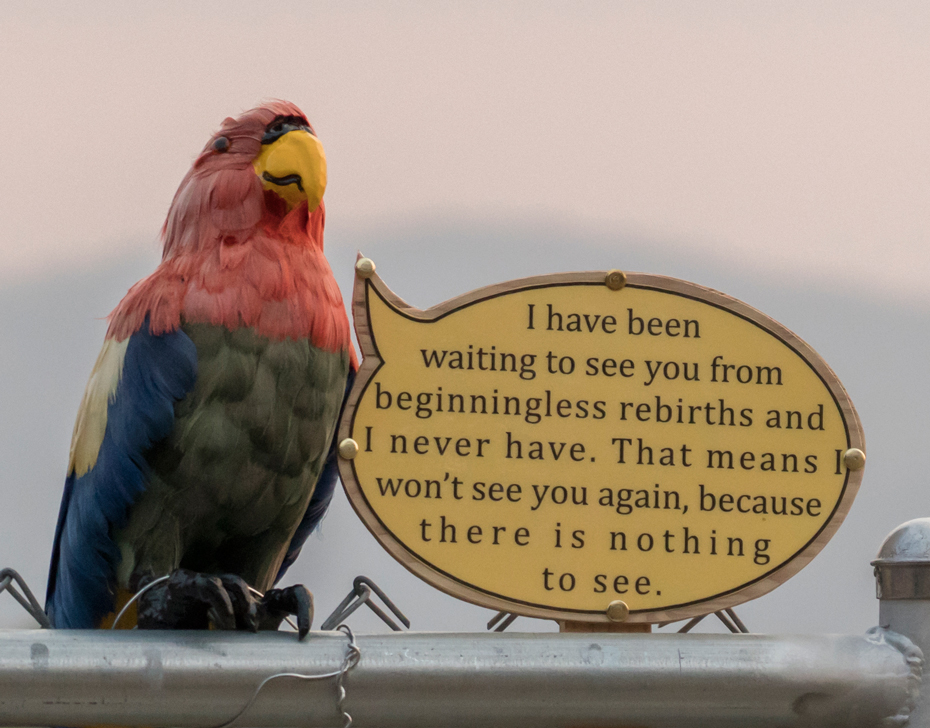
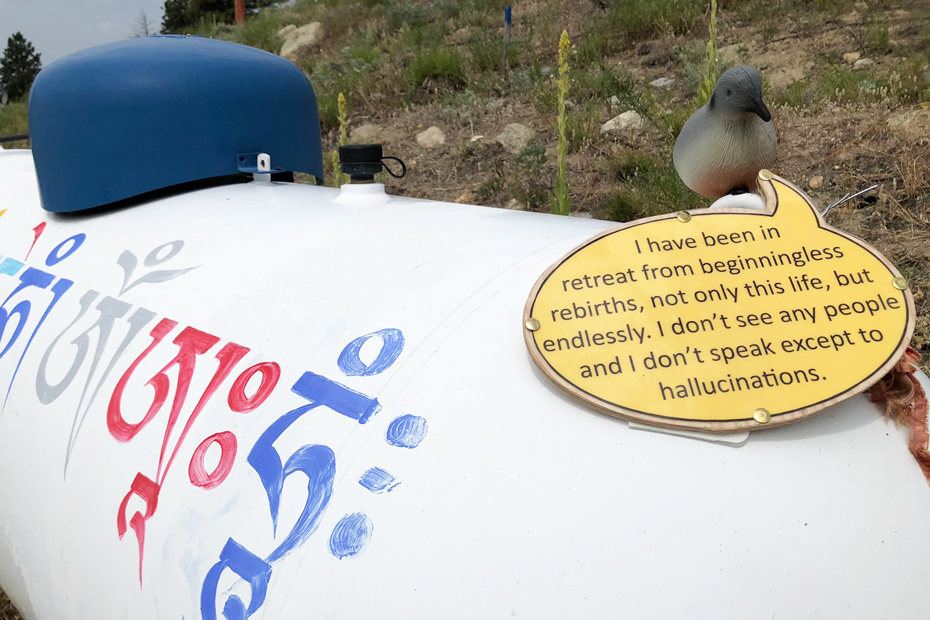

Buddha Amitabha Pure Land, Washington, US, September 2018. Photo by Ven. Roger Kunsang.
Two ducks in rainboots have two signs that say the following:
“Why don’t you practice wisdom? Look at everything as empty, as they are empty in reality. Then you can liberate all sentient beings and bring them to enlightenment.”
“Why don’t you practice bodhichitta? To not only enlighten yourself, but enlighten all sentient beings.”
A dog, decorated with butterflies, says, “I want to achieve enlightenment quicker than you. Because I am offering myself to every single sentient being, for their enlightenment.”

“I want to announce to all the sentient beings, whether I want to be living in this tree or to be out, to be free from this. It is in my hands. So like this, it is the same for you people, whether you want to be in samsara or to be free from samsara. To be in samsara means experiencing the oceans of samsaric suffering or to be free from that forever, not just for seven days’ vacation, not like that. So it is totally in your hands. It is up to you, what you do with your mind, how you use your mind. Thank you very much.”
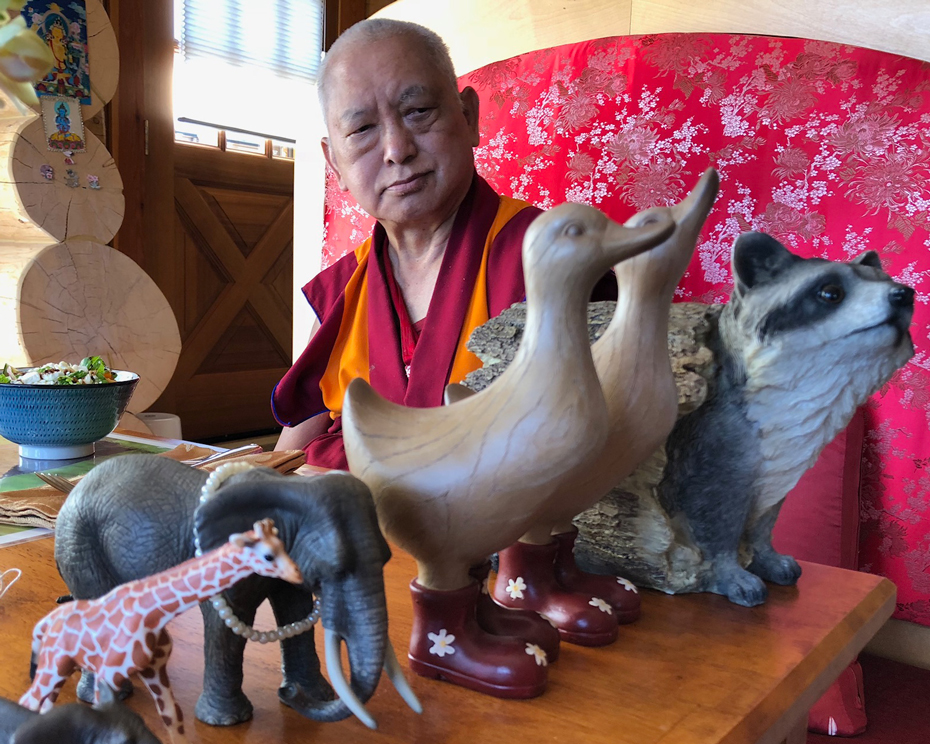
Lama Zopa Rinpoche with animal statutes at Buddha Amitabha Pure Land, Washington, US, September 2018. Photo by Ven. Roger Kunsang.
Watch recorded video teachings from Lama Zopa Rinpoche, including recent teachings at Amitabha Buddhist Centre, Kurukulla Center, and Maitripa College, online:
https://fpmt.org/media/streaming/teachings-of-lama-zopa-rinpoche/
More information, photos, teaching schedule, and updates about FPMT spiritual director Lama Zopa Rinpoche can be found on Rinpoche’s webpage on FPMT.org. If you’d like to receive news of Lama Zopa Rinpoche and FPMT via email, sign up to FPMT News.