
 receive our newsletters
 join Friends of FPMT
- Home
- FPMT Homepage

Foundation for the Preservation of the Mahayana Tradition
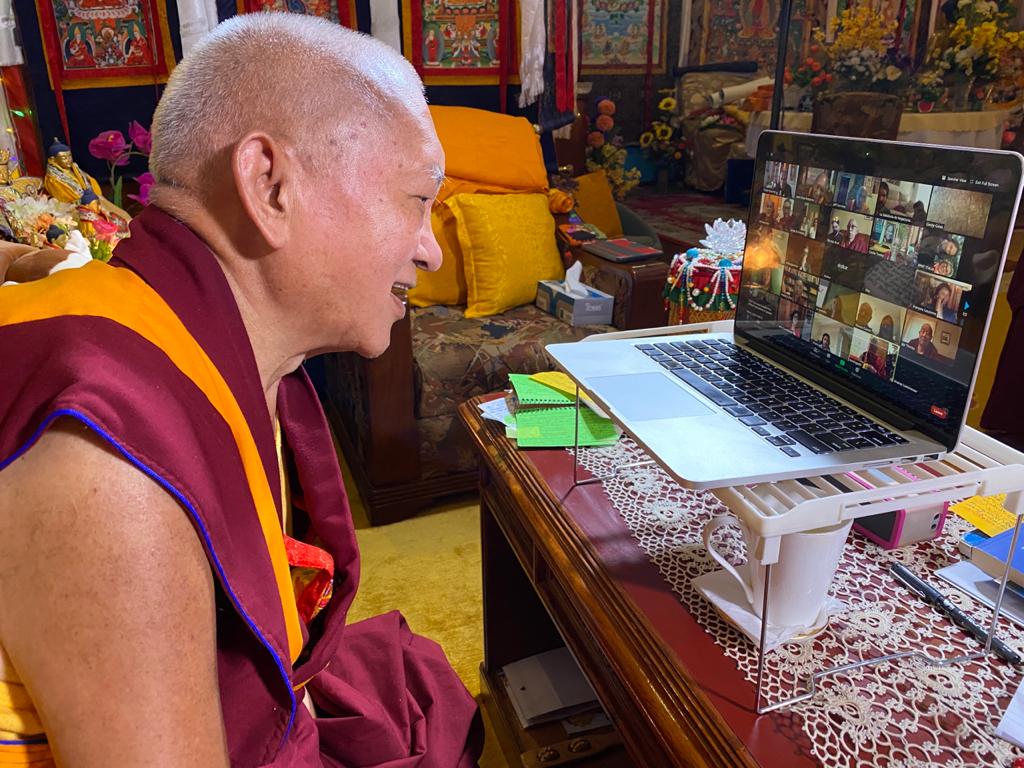
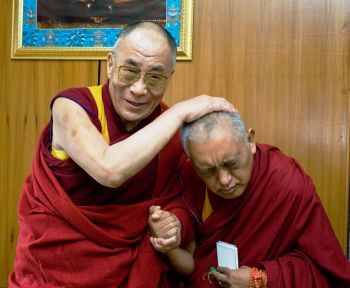
The FPMT is an organization devoted to preserving and spreading Mahayana Buddhism worldwide by creating opportunities to listen, reflect, meditate, practice and actualize the unmistaken teachings of the Buddha and based on that experience spreading the Dharma to sentient beings. We provide integrated education through which people’s minds and hearts can be transformed into their highest potential for the benefit of others, inspired by an attitude of universal responsibility and service. We are committed to creating harmonious environments and helping all beings develop their full potential of infinite wisdom and compassion. Our organization is based on the Buddhist tradition of Lama Tsongkhapa of Tibet as taught to us by our founders Lama Thubten Yeshe and Lama Thubten Zopa Rinpoche.
- Willkommen
Die Stiftung zur Erhaltung der Mahayana Tradition (FPMT) ist eine Organisation, die sich weltweit für die Erhaltung und Verbreitung des Mahayana-Buddhismus einsetzt, indem sie Möglichkeiten schafft, den makellosen Lehren des Buddha zuzuhören, über sie zur reflektieren und zu meditieren und auf der Grundlage dieser Erfahrung das Dharma unter den Lebewesen zu verbreiten.
Wir bieten integrierte Schulungswege an, durch denen der Geist und das Herz der Menschen in ihr höchstes Potential verwandelt werden zum Wohl der anderen – inspiriert durch eine Haltung der universellen Verantwortung und dem Wunsch zu dienen. Wir haben uns verpflichtet, harmonische Umgebungen zu schaffen und allen Wesen zu helfen, ihr volles Potenzial unendlicher Weisheit und grenzenlosen Mitgefühls zu verwirklichen.
Unsere Organisation basiert auf der buddhistischen Tradition von Lama Tsongkhapa von Tibet, so wie sie uns von unseren Gründern Lama Thubten Yeshe und Lama Thubten Zopa Rinpoche gelehrt wird.
- Bienvenidos
La Fundación para la preservación de la tradición Mahayana (FPMT) es una organización que se dedica a preservar y difundir el budismo Mahayana en todo el mundo, creando oportunidades para escuchar, reflexionar, meditar, practicar y actualizar las enseñanzas inconfundibles de Buda y en base a esa experiencia difundir el Dharma a los seres.
Proporcionamos una educación integrada a través de la cual las mentes y los corazones de las personas se pueden transformar en su mayor potencial para el beneficio de los demás, inspirados por una actitud de responsabilidad y servicio universales. Estamos comprometidos a crear ambientes armoniosos y ayudar a todos los seres a desarrollar todo su potencial de infinita sabiduría y compasión.
Nuestra organización se basa en la tradición budista de Lama Tsongkhapa del Tíbet como nos lo enseñaron nuestros fundadores Lama Thubten Yeshe y Lama Zopa Rinpoche.
A continuación puede ver una lista de los centros y sus páginas web en su lengua preferida.
- Bienvenue
L’organisation de la FPMT a pour vocation la préservation et la diffusion du bouddhisme du mahayana dans le monde entier. Elle offre l’opportunité d’écouter, de réfléchir, de méditer, de pratiquer et de réaliser les enseignements excellents du Bouddha, pour ensuite transmettre le Dharma à tous les êtres. Nous proposons une formation intégrée grâce à laquelle le cœur et l’esprit de chacun peuvent accomplir leur potentiel le plus élevé pour le bien d’autrui, inspirés par le sens du service et une responsabilité universelle. Nous nous engageons à créer un environnement harmonieux et à aider tous les êtres à épanouir leur potentiel illimité de compassion et de sagesse. Notre organisation s’appuie sur la tradition guéloukpa de Lama Tsongkhapa du Tibet, telle qu’elle a été enseignée par nos fondateurs Lama Thoubtèn Yéshé et Lama Zopa Rinpoché.
Visitez le site de notre Editions Mahayana pour les traductions, conseils et nouvelles du Bureau international en français.
Voici une liste de centres et de leurs sites dans votre langue préférée
- Benvenuto
L’FPMT è un organizzazione il cui scopo è preservare e diffondere il Buddhismo Mahayana nel mondo, creando occasioni di ascolto, riflessione, meditazione e pratica dei perfetti insegnamenti del Buddha, al fine di attualizzare e diffondere il Dharma fra tutti gli esseri senzienti.
Offriamo un’educazione integrata, che può trasformare la mente e i cuori delle persone nel loro massimo potenziale, per il beneficio di tutti gli esseri, ispirati da un’attitudine di responsabilità universale e di servizio.
Il nostro obiettivo è quello di creare contesti armoniosi e aiutare tutti gli esseri a sviluppare in modo completo le proprie potenzialità di infinita saggezza e compassione.
La nostra organizzazione si basa sulla tradizione buddhista di Lama Tsongkhapa del Tibet, così come ci è stata insegnata dai nostri fondatori Lama Thubten Yeshe e Lama Zopa Rinpoche.
Di seguito potete trovare un elenco dei centri e dei loro siti nella lingua da voi prescelta.
- 欢迎 / 歡迎
简体中文
“护持大乘法脉基金会”( 英文简称:FPMT。全名:Foundation for the Preservation of the Mahayana Tradition) 是一个致力于护持和弘扬大乘佛法的国际佛教组织。我们提供听闻,思维,禅修,修行和实证佛陀无误教法的机会,以便让一切众生都能够享受佛法的指引和滋润。
我们全力创造和谐融洽的环境, 为人们提供解行并重的完整佛法教育,以便启发内在的环宇悲心及责任心,并开发内心所蕴藏的巨大潜能 — 无限的智慧与悲心 — 以便利益和服务一切有情。
FPMT的创办人是图腾耶喜喇嘛和喇嘛梭巴仁波切。我们所修习的是由两位上师所教导的,西藏喀巴大师的佛法传承。
繁體中文
護持大乘法脈基金會”( 英文簡稱:FPMT。全名:Found
ation for the Preservation of the Mahayana Tradition ) 是一個致力於護持和弘揚大乘佛法的國際佛教組織。我們提供聽聞, 思維,禪修,修行和實證佛陀無誤教法的機會,以便讓一切眾生都能 夠享受佛法的指引和滋潤。 我們全力創造和諧融洽的環境,
為人們提供解行並重的完整佛法教育,以便啟發內在的環宇悲心及責 任心,並開發內心所蘊藏的巨大潛能 — 無限的智慧與悲心 – – 以便利益和服務一切有情。 FPMT的創辦人是圖騰耶喜喇嘛和喇嘛梭巴仁波切。
我們所修習的是由兩位上師所教導的,西藏喀巴大師的佛法傳承。 察看道场信息:
- FPMT Homepage
- News/Media
-
- Study & Practice
-
-
-
- About FPMT Education Services
- Latest News
- Programs
- New to Buddhism?
- Buddhist Mind Science: Activating Your Potential
- Heart Advice for Death and Dying
- Discovering Buddhism
- Living in the Path
- Exploring Buddhism
- FPMT Basic Program
- FPMT Masters Program
- FPMT In-Depth Meditation Training
- Maitripa College
- Lotsawa Rinchen Zangpo Translator Program
- Universal Education for Compassion & Wisdom
- Online Learning Center
-
- Prayers & Practice Materials
- Overview of Prayers & Practices
- Full Catalogue of Prayers & Practice Materials
- Explore Popular Topics
- Benefiting Animals
- Chenrezig Resources
- Death & Dying Resources
- Lama Chopa (Guru Puja)
- Lama Zopa Rinpoche: Compendium of Precious Instructions
- Lama Zopa Rinpoche: Life Practice Advice
- Lama Zopa Rinpoche Practice Series
- Lamrim Resources
- Mantras
- Prayer Book Updates
- Purification Practices
- Sutras
- Thought Transformation (Lojong)
- Audio Materials
- Dharma Dates - Tibetan Calendar
- Translation Services
- Publishing Services
- Ways to Offer Support
- Prayers & Practice Materials
-
- Teachings and Advice
- Find Teachings and Advice
- Lama Zopa Rinpoche Advice Page
- Lama Zopa Rinpoche: Compendium of Precious Instructions
- Lama Zopa Rinpoche Video Teachings
- ༧སྐྱབས་རྗེ་བཟོད་པ་རིན་པོ་ཆེ་མཆོག་ནས་སྩལ་བའི་བཀའ་སློབ་བརྙན་འཕྲིན།
- Podcasts
- Lama Yeshe Wisdom Archive
- Buddhism FAQ
- Dharma for Young People
- Resources on Holy Objects
- Teachings and Advice
-
-
-
*If a menu item has a submenu clicking once will expand the menu clicking twice will open the page.
-
-
- Centers
-
- Teachers
-
- Projects
-
-
-
-
*If a menu item has a submenu clicking once will expand the menu clicking twice will open the page.
-
-
- FPMT
-
-
-
-
-
Without the practice of morality, there’s no enlightenment, no liberation from samsara, not even good rebirths in future lives.
Lama Zopa Rinpoche
-
-
-
- Shop
-
-
-
The Foundation Store is FPMT’s online shop and features a vast selection of Buddhist study and practice materials written or recommended by our lineage gurus. These items include homestudy programs, prayers and practices in PDF or eBook format, materials for children, and other resources to support practitioners.
Items displayed in the shop are made available for Dharma practice and educational purposes, and never for the purpose of profiting from their sale. Please read FPMT Foundation Store Policy Regarding Dharma Items for more information.
-
-

History in the Making
Beginnings
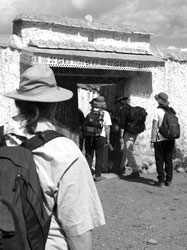 The hamlet of Shing kar-la lies close by the village of Tolung Dechen in the long, wide Phenpo Valley, three hours drive northwest from Lhasa. The house known as Shing kar chang-mar faces away from the Chinese-built road, where timber lorries roar alongside a wall of steel pylons carrying electricity to the city.
The village of Tolung Dechen consists of three large families. The family occupying the Shing kar chang mar house bears the same name as the house, and no one can recall a time when they and the house were not there. A friendly black dog, adorned with a thick ruff of red-dyed bristles, is chained to a Chinese tractor at the sun-bleached wooden door. Tin cans planted with marigolds, forget-me-nots, and wallflowers stand against a smooth mud wall. Colored cotton ruffles hang above each doorway.
The family wear traditional clothing – a thick chuba, the wraparound dress of Tibet, boots, and for the women, colored striped aprons. Washing is not a feature at this altitude. They grow their own food: crumbly pale salty cheese piled into wooden bowls, dark air-dried yak meat, cauliflower, spinach, and a little chili eaten with freshly made noodles or tsampa – roasted barley ground into flour, a beloved staple of Tibet. They drink salted butter tea or chhang, a homemade beer. Children abound, the toddlers in woolen trousers strategically open underneath from front to back. There is a family resemblance – a good high round forehead and a soft mouth. Everyone is born and dies at home, spending their entire life working and praying. They also take great delight in endless jokes and games.
Apart from the road, electricity, the tractor, plastic trinkets, the women’s polyester shirts, and of course the government, nothing much has changed at Tolung Dechen since a baby boy named Dondrub Dorje was born there in May 1935, the same year as the new Dalai Lama. It was an easy birth and the child was born with a caul, considered auspicious in Tibet as elsewhere. His mother, Jhako, already had three children from an earlier marriage – two girls, Dorje and Tsering Dolma, and a boy, Phuntsog Thinley, born in September 1929 …
About an hour’s walk across the fields from Shing kar-la is a small nunnery, Rakor Gompa, near Chimelung, a popular pilgrimage spot.
When Dondrub Dorje was born, Rakor housed about sixty nuns. Their abbess, a fine big woman known as Ache Jampa, had only recently died. During her long life she had inspired many people and was remembered for her favorite prayer, the popular: “May I be able to bring the Dharma to those who have never met it and who live in suffering, blinded by the darkness in their wisdom eye …”
Not long after the death of Ache Jampa, an important Kagyu lama, the Eleventh Nerving Pawo Tulku, visited the area. The Rakor nuns were eager to know if he could tell them where the reincarnation of their beloved abbess had been born. After some deliberation he directed them to the Shing kar chang mar house saying, “A small boy there is the reincarnation of your abbess.”
The discovery filled the nuns with joy, and Dondrub Dorje was not yet walking when they came to claim him. They visited him often, bearing gifts and lavishing on him the combined love of sixty maiden aunts. “They talked to me about my history,” he later recalled. “They would show me things and say, ‘This is your thing from the previous life.’ I was not much interested. I was so young and just wanted to play. The nuns loved me so much. ‘You are a good reincarnation,’ they told me…”
(Dondrub Dorje, later to be known as Lama Thubten Yeshe, studied at the great Sera Monastic University until 1959 when the Chinese invasion of Tibet forced him into exile in India. Lama Yeshe continued to study and meditate in India until 1967, when, with his chief disciple, Lama Thubten Zopa Rinpoche, he went to Nepal. Two years later he established Kopan Monastery, near Kathmandu, in order to teach Buddhism to Westerners.)
Archive
- Mandala for 2021
- Mandala for 2020
- Mandala for 2019
- Mandala for 2018
- January-June
- Changing the Mind, Changing the World: The Mind, Karma, and Global Change
- Karma: Is the World Ready to Understand?
- Helping Young People Develop a Good Heart
- Compassion in Action: Maitreya School
- MAITRI Charitable Trust – Keeping the Vision True
- Social & Medical Work of the Shakyamuni Buddha Community Health Care Clinic
- Tara Children’s Project – Manifesting the Mind of Compassion
- July-December
- January-June
- Mandala for 2017
- Mandala for 2016
- July-December
- Advice that Fulfills Wishes
- Isabelle Johnston Remembers Ven. Thubten Labdron (Trisha Donnelly)
- Nicholas Ribush Remembers Ven. Thubten Labdron (Trisha Donnelly)
- Remembrances from the Sisters of Ven. Thubten Labdron (Trisha Donnelly)
- The Foundation for the Development of Compassion and Wisdom Carries Lama Yeshe’s Vision into the Future
- January-June
- ‘If I Created This, Could I Also Fix It?’
- A New Era for Gelug Nuns: Geshema Degree Bring Opportunity and Responsibility
- Benedict and the Buddha: Monasticism in the West
- Distilling Shantideva’s ‘Bodhicharyavatara’
- Helping Buddhism Strengthen and Grow in Russia: An Interview with Telo Rinpoche
- Kopan Helping Hands
- Mia’s Miles of Merit
- The Nuns of Kopan
- The Union of Study and Practice
- Training the Mind in Calm-Abiding
- July-December
- Mandala for 2015
- January
- A Feast for Mind and Heart
- Portrait of a Buddhist Chaplain: Holly Hisamoto Leans Into Practice
- Advice for a Depressed and Suicidal Mother
- Making Juniper Powder Incense for Filling Statues and Stupas
- Parenting Unplugged: Self-Care
- Praise to Kyabje Thubten Zopa Rinpoche on the Occasion of the Long Life Puja at the CPMT Meeting
- The “Monk with a Camera”: An Interview with Khen Rinpoche Nicholas Vreeland
- July-December
- A Many-Splendored Thing: Anne Carolyn Klein on the Transmission of Tibetan Buddhism
- An Editor’s Approach to the Words of Her Perfect Teacher
- One Letter at a Time
- Practicing Like Your Hair Is on Fire
- Spain’s Tushita Retreat Center Celebrates 20 Years
- Standing Together: Tong-nyi Nying-je Ling’s Interfaith Work in Copenhagen
- The Life of a Bodhisattva: The Great Kindness of Khunu Lama Rinpoche
- The Life of Khensur Jampa Tegchok
- The Most Important Practice of Patience
- The Nature of Biography: An Excerpt from Elijah Ary’s ‘Authorized Lives’
- January
- Mandala for 2014
- January
- An Interview with Buddhist Scholar John Dunne on Mindfulness
- FPMT Mongolia: Fulfilling the Common Desire for Buddhism’s Resurgence
- Kadampa Center’s Past, Present and Future Times
- Rejoicing in the 100 Million Mani Retreat in Mongolia
- The Four Harmonious Friends
- The Benefits of the Mani Retreat
- A Day in the Life in Mongolia
- The 100 Million Mani Retreat in Mongolia Photo Gallery
- FPMT in Mongolia 1999-2012
- FPMT Mongolia in Action [Video]
- Burnout: Is It Really a Problem?
- Considerations for Animal Blessings and Animal Liberations
- Rejoice! Prayer Flags for Rinpoche’s Long Life
- Meet Geshe Gelek Chodha
- Letters to the Editor
- April
- An Update from Kushinagar
- Establishing a Daily Practice
- Giant Steps Forward for the Maitreya Projects
- Istituto Lama Tzong Khapa Restores ‘Kundun’ Chenrezig
- Jade Buddha Continues World Tour in North America
- La Gran Estupa de la Compasión Universal Toma Forma
- Living the Gift
- Pamtingpa Center Builds a High Desert Stupa
- Photo Gallery: Pamtingpa Center Builds a High Desert Stupa
- Progreso Gigantesco Para Los Proyectos Maitreya
- The Mind is the Measure of All Things
- The Potential Project and Corporate-Based Mindfulness Training
- The Precious and Wish-fulfilling Holy Objects of FPMT
- Visit Chandrakirti Tibetan Buddhist Meditation Centre in New Zealand
- July
- Challenging Orthodoxy in Tibetan Buddhism
- Confessions of a Mahamudra Junkie
- Find Out What Five-year-old Dechen Bloom Asked Ven. Robina Courtin about the Heart Sutra
- Geshe Lamsang’s Heart Advice
- Growing Up within the FPMT Mandala
- Holding Up a Mirror to Our Children’s Behavior
- Not Just For Kids: Vajrayana Institute’s Child-Focused Activities
- Renewed Faith, Inspiration, Devotion and Understanding: Khadro-la Visits New Zealand
- Sobering Up from Samsara
- Tara Redwood School: Sprouting the Seeds of Compassion
- The Eight Auspicious Signs
- What Buddha Cherishes Most: The Story of the Goats at Root Institute
- October
- ‘He Was for Me the Perfection of Patience and Generosity’
- ‘I Have Never Known a More Generous Person in My Life’
- A Compassionate Insurrection
- Buddhism’s Common Ground: An Interview with Ven. Thubten Chodron
- Liberation through Education
- Lost in Translation: A Reflection on the Sacred
- Origin and Spread of the Buddha’s Doctrine
- Recognizing Alison Murdoch’s 10-Year Contribution to Universal Education and FDCW
- The Benefits of the ‘Golden Light Sutra’
- The Murky Reward of Nakedness
- What About Me?
- You Are Not Alone
- January
- Mandala for 2013
- January
- Nepal: ‘The Most Holy Place in the World’
- The Dalai Lama Completes His Studies
- Like a Waking Dream: Geshe Sopa’s Students Share Their Stories
- More than Auspicious
- Pure Gold on the Ground Below
- The Bodhisattva on Bascom Hill
- Fulfilling a Long-held Promise
- Reminiscences of Geshe Sopa
- Profound Equanimity that Constantly Perserveres
- A Shining Presence: Geshe Sopa in Photos
- The Most Important Influence on My Life
- The Simplicity of Great Authority
- Ven. Geshe Lhundub Sopa Rinpoche, My Teacher
- Both Father and Son: Geshe Sopa Rinpoche’s Omnipresent Blessing
- A Privilege and an Immeasurable Gift
- Patience in Ascertaining the Truth
- Praises for Our Perfect Teacher Geshe Lhundub Sopa Rinpoche
- From the Vault: “An Extraordinary Modern-day Milarepa”
- FPMT Activities in Nepal Photo Gallery
- Seeing Problems as Positive
- A Straight and Steady Motivation
- A Letter from Animal Liberation Sanctuary
- Ancient Philosophy in Everyday Life at the Himalayan Buddhist Meditation Centre
- Himalayan Yogic Institute: The Birth of the Himalayan Buddhist Meditation Centre
- His Holiness at Kurukulla Center Photo Gallery
- The Mummification of His Holiness the 9th Bogd Jetsün Dampa Rinpoche
- Paul Donnelly on the Creation of “Like a Waking Dream”
- The Movement for Peace with Justice and Dignity
- A New Generation of Ladakhi Nuns
- Tibetan Buddhist Nuns in Ladakh and Zanskar Photo Gallery
- Finding Inspiration in FPMT Centers: An Interview with Geshe Sherab
- Meet Geshe Jampa Gelek: Istituto Lama Tzong Khapa’s Resident Teacher
- An Irresistible Pull
- The “Bollywood” Nun: An Indian Actress Takes Ordination Vows
- Book Review: The Black Hat Eccentric
- Editor’s Choice – Media Reviews
- The Second Round of 108 Nyung Näs at Institut Vajra Yogini
- April
- The Need for Qualified Teachers
- Don’t Just Sit There … Circumambulate!
- How to Understand Our Reality from the Universal Point of View
- The Purpose of Study
- Treading Fertile Spiritual Soil
- Going Home to Buddhism: An Interview with Pilgrimage Organizer Effie Fletcher
- Pilgrimage to Tibet
- Songs and Mental States
- Where Dharma Meets Technology Meets Art
- The Path to Changing One’s Mind
- Meet Geshe Thubten Soepa
- Editor’s Choice – Media Reviews
- July
- Understanding Lam-rim: An Interview with Ven. Sangye Khadro on the Masters Program
- ‘I Will Be Paralyzed and Happy’ and Other Writings by Bob Brintz
- Behaving in a Greener Way: Panchen Losang Chogyen Gelugzentrum Acts Ecologically
- Blessing the Waters of New Zealand’s North Island
- Buddhist Business Lessons to Share: Creating Right Livelihood
- Cherishing Life and a Recipe for Mushroom and Kale Pâté
- Four Countries, Countless Benefits: Lama Zopa Rinpoche’s East Asia Tour Photo Gallery
- His Holiness the Dalai Lama at FPMT Center Events March-May 2013 Photo Gallery
- His Holiness the Dalai Lama on the Nature of Mind
- His Holiness the Dalai Lama Speaks on Aging and Death in Switzerland
- I Will Be Paralyzed and Happy
- In Praise of the Universal Mother
- Meet Geshe Deyang
- On Becoming a Vegan: When Vegetarian is Not Enough
- Our Fundamental Needs: An Interview with David Suzuki
- Overcoming Alcoholism and Introducing a Healthy Lifestyle in Mongolia
- Planting Seeds of Peace in Mexico City: Universal Education for Compassion and Wisdom in Action
- Shopping Buddha
- The Purpose of Study (continued): Ven. George Churinoff Finishes His Story with Lama Yeshe and Tenzin Ösel Hita
- We Cannot Live without Harming Others
- October
- Mayra Rocha Sandoval Completes Three-Year Lam-rim Retreat in Mexico City
- Achieving Realizations of the Path
- Advice on Caring for Mother
- His Holiness Completes Ninth Australian Tour
- ‘One Day in Service to His Holiness Is a Life Well Spent’: His Holiness the Dalai Lama in Melbourne 2013
- Identifying the Object of Negation
- His Holiness the Dalai Lama in New Zealand
- The Exemplary Life and Death of Geshe Yeshe Tobden
- The Sera Connection: An Interview with José Cabezón
- The Greatest Honor: Becoming a Rik Chung
- A Spiritual Journey to Tsum
- Sera Je Food Fund’s Dramatic Impact on the Monks of Sera Je Monastery
- Cat Rescue as a Means to Make Merit
- Alison Kaye Harr
- The Sera Je Food Fund
- Land of Joy: An Interview with Andy Wistreich
- ‘A Transforming Experience in a Completely Unexpected Way’: Masters Program Students Near End of Studies at Istituto Lama Tzong Khapa
- ‘Only Birds and Crickets to Distract the Mind’: First Retreat in the New Gompa at De-Tong Ling
- Ideas on Self-Acceptance and Bringing Dharma to the Community: An Interview with Alan Carter
- ‘I Realized That My Life Couldn’t Be the Same Again’
- Meet Geshe Lobsang Kunchen
- Complexities of Tibetan Culture Past and Present: Five Book Reviews
- January
- Mandala for 2012
- January
- El fallecimiento de Khensur Rimpoche Lama Lhundrup Rigsel
- Le décès de Khensour Rinpoché Lama Lhoundroup Rigsel
- The Passing of Khensur Rinpoche Lama Lhundrup Rigsel
- UWE Gathering in France: Inspiration, Information, Transformation!
- Preserving the Foundations: Merry Colony and FPMT Education
- Compassion in Education: An Interview with Pam Cayton
- Benefits of Generating a Good Heart
- Collaborators in Preservation: Key Education Services Contributors Reflect on the Future of FPMT Education and Their Work with Merry Colony
- What Differentiates Buddhism from Christianity
- On Receiving Generosity
- Of Yaks and Dogs
- Feeding Fish at Nalanda Monastery
- The Karma of Success
- Occupy Samsara
- Lama Says You Should Go to Kopan and He Will Take Care of You
- Big Love Excerpt
- FPMT News Around the World Photo Gallery
- Nalanda Monastery’s 15-Year Master Plan
- Editor’s Choice – Media Reviews
- The Passing of Khensur Rinpoche Lama Lhundrup Photo Gallery
- April
- ‘Subduing the Mind, Actualizing the Path’ Resource Area
- Big Ears, Small Mouths: The Life of a Retreat Caretaker
- Random Reflections on Retreating
- Realizing the Dharmakaya
- Report from Bodhgaya: On the Ground at Kalachackra 2012
- Subduing the Mind, Actualizing the Path
- You Can, You Must
- Big Ears, Small Mouths
- Don’t Wake Up with a Mind Like That
- Random Reflections on Retreating
- Retreat in Everyday Life
- Universal Mandala School
- Animal Liberation Sanctuary Update
- The Misleading Mind – Searching for Happily Ever After
- Sitting Easy
- An Interview with Åge Delbanco
- Tulku Gyatso Remembered
- Thangka Exhibition at Maitreya Instituut Amsterdam
- The Beginning of Tushita
- FPMT News Around the World Photo Gallery
- News from Kopan Monstery and Its Projects
- Editor’s Choice – Media Reviews
- July
- Comienzo con duda
- Exploring the Practice of Writing: The Mindful Writer
- P513 and the Golden Light Sutra
- Teaching a Good Heart: FPMT Registered Teachers
- Like Nectar on Flowers: The Selfless Service of FPMT-Registered Teachers
- The Simile of a Cloud
- Mandala Talk: Ven. Thubten Chodron on “Insight into Emptiness”
- Begin with Doubt
- The Seventeen Pandits of Nalanda Monastery
- ‘Everybody Needs Universal Compassion and Wisdom Education’: An Interview with Lama Zopa Rinpoche on UECW
- ‘Everybody Needs Universal Compassion and Wisdom Education’: An Interview with Lama Zopa Rinpoche on UECW [Unedited Transcript]
- Contest Winners: Deciphering the Guru’s Grocery List!
- Illuminating the Darkness: Helping Kathmandu’s Street Kids
- FPMT Around the World Photo Gallery
- ‘She Is Not Looking for Another Man’
- Ever Shining Consummate Sun
- My November Course
- ‘You Are His Daughter and You Want to Help’
- Your Prayers and Dedications ‘Have Power’
- Editor’s Choice – Media Reviews
- Half the Woman: Losing Weight for Rinpoche
- Taking Online Dating as the Path
- Waidangong: Shaking One’s Way to Health
- October
- La joie de l’étude : une interview de Guéshé Kelsang Wangmo
- Khadro-la on Using Stupas to Minimize Harm from the Elements
- 16 Actitudes at Centro Yamantaka in Colombia
- Children and Teens Programs Take Root and Grow at Losang Dragpa Centre in Malaysia
- The Joy of Study: An Interview with Geshe Kelsang Wangmo
- Publishing the FPMT Lineage: An Interview with Lama Yeshe Wisdom Archive Director Nicholas Ribush
- Key to the Cave
- The Practice of Writing: An Interview with Dinty W. Moore
- Craig Preston on Teaching and Translating Classical Tibetan
- Loneliness
- The Qualities of Good Food
- Where I Needed to Be
- Meet Geshe Ngawang Sonam: Hayagriva Buddhist Centre’s New Resident Teacher
- Stay Low and Go, Go, Go: Fire Safety Training at Kopan Monastery and Nunnery
- Rinpoche’s Decision
- Insight into Emptiness
- Editor’s Choice – Media Reviews
- January
- Mandala for 2011
- January
- The Preservation of the Mahayana Tradition: Looking to Mongolia
- Tibet, Tibet, I Have to Go to Tibet!
- Youth in Refuge
- Lama Yeshe in London, 1975 (Video Recording)
- Hippie Era: Looking for Meaning in Our Lives
- Tsog Adventure
- Transformative Mindfulness and the 16 Guidelines in Canada and North America
- 16 Guidelines at Akshay Charitable School, Bodhgaya, India
- Taking the 16 Guidelines into South African Schools
- 16 To Live By Update
- Educación Universal Update
- Outings and Expeditions with Ready Set Happy
- Three Ways to Help Animals
- Meet Sera Je, the Dog!
- NHS Videos for Carers
- Cittamani Hospice Service’s Annual Memorial
- Mercy Relief to Thai Flood Victims
- His Holiness the Dalai Lama in San Jose, California
- Making Business Work for FPMT
- Bhutan’s Prime Minister is Serious about Happiness
- Resources for “Peaceful Jihad”
- Yoga for Health
- Addiction Workshops at Mahamudra Centre
- Nine Questions About Vegetarianism
- An Interview with Jetsünma Tenzin Palmo
- A Visit for My Mother, A Crash Course for Me
- Lights and Rainbows: My Struggle
- A Love Letter to My Valentine: Let Me Tell You Who Our Cupid Is
- A Young Lass, A Manangi
- An Open Letter To B. Alan Wallace
- Editor’s Choice
- April
- E. Gene Smith Obituaries
- Engaged Buddhism: Compassion in Action
- Lama Zopa Rinpoche in London, 1975 (Video Recording)
- Photo Gallery
- Engaged Buddhism Resource Guide
- Trailers for “Meditations from the Multiplex”
- Raw Food Resource Guide
- The Healing Power of Juice Fasting
- An Interview with Anila Ann McNeil
- Dagri Rinpoche at the FPMTA National Meeting
- An Old Story of Faith and Doubt: Reminiscences of Alan Wallace and Stephen Batchelor
- Editor’s Choice
- July
- Practices for Lama Zopa Rinpoche’s Long Life
- The Dissatisfied Mind of Desire
- Don't Stop! Go Now!
- ¡No pares! ¡Ve ahora!
- Leading with the Mind of a Servant
- Practices to Control Earthquakes and the Four Elements
- El retiro de la vida
- Protection from Radiation
- Morning Intention and Breath Counting with Children
- Interview with the Authors of the Recently Published Winning Ways
- Buddhism in the Trenches
- Cuando el gurú manifiesta un ataque
- The Hidden Toll of Australia’s 2011 Floods
- His Holiness Spreads Wisdom of Universal Human Values and Religious Harmony
- “Peace Through Inner Peace,” His Holiness Visits Minneapolis
- Hurray!
- Anger Always Hurts Me
- La rabia siempre me hiere
- Move, Breathe and Be Kind
- Working with Addiction
- Гнев всегда причиняет вред Мне
- הכעס תמיד פוגע בי
- Ian Green: Buddha’s Builder
- Big Love Excerpt
- Thinking Like a Thief
- Robert Page’s Art for Liberation Prison Project
- Ethics on My Mind
- Surrendering to Monkeys: Letting Go of the Self
- The Kindness of Lama Yeshe and My Mother
- What Goes Around, Comes Around
- Editor’s Choice
- October
- An Idea to Begin to Repay the Kindness
- Remembering the Kindness of His Holiness the Dalai Lama and the Courageous People of Tibet
- Remembering the Kindness
- Dalai Lama on The Spirit of Things
- Harry O’Brien Introduces His Holiness to Australian Football
- His Holiness in Melbourne, Australia 2011
- His Holiness the Dalai Lama 2011 Chenrezig Gompa Talk
- His Holiness the Dalai Lama at Vajrayana Institute’s Happiness & Its Causes Conference
- Luka Bloom Shares “As I Waved Goodbye” with His Holiness the Dalai Lama
- REJOICE! FPMT Offerings to His Holiness in Australia
- Khensur Rinpoche Lama Lhundrup
- A Message from Kopan Monastery
- A note on Khensur Rinpoche Lama Lhundrup’s passing
- Discovering Khensur Rinpoche Lama Lhundrup’s Relics
- Madre, padre, maestro, amigo: La bondad incomparable del querido Khensur Rimpoché Lama Lhundrup Rigsel de Kopan
- Người Mẹ, người Cha, người Thầy, người Bạn: Lòng Nhân Từ Vô Song của Khensur Rinpoche Lama Lhundrup Rigsel Cao Quý
- Interview with Lama Lhundrup
- Lama Lhundrup Videos
- A Thank You Puja at Kopan Monastery
- Caring For Lama Lhundrup
- Un père, une mère, un enseignant, un ami : L’incomparable bonté du vénéré Khènsour Rinpoché Lama Lhoundroup Rigsèl de Kopan
- Lama Lhundrup: An Old, Dear Friend
- Memories of Lama Lhundrup
- My Love Affair With Kopan Monastery
- An Aspect of Lama Lhunrup Seen at Kopan
- The Qualities of Lama Lhundrup
- The Kindness of Lama Lhundrup
- Thus I Have Heard: An Offering to the Participants of the First FPMT Translation Conference
- Creating Compassionate Cultures
- Ants Spread Dharma
- New Goats for Animal Liberation Sanctuary
- It Doesn’t Need to Be Either/Or
- Vegan Pumpkin “Cheesecake”
- Teachers Discuss the Future of Buddhism in the West: The 2011 Garrison Institute Conference
- The European Buddhist Union and Engaged Buddhism
- Socially Responsible Investing
- Panchen Losang Chogyen Gelegzentrum Makes a Plan for World Environment Day
- Meher Baba Clearly Told Me in a Dream
- Gelek Sherpa Photo Gallery
- Sarah’s Journey
- A Pilgrim’s progress
- Big Love Excerpt
- FPMT News Around the World Photo Gallery
- Editor’s Choice
- January
- Mandala for 2010
- January
- Back Over the Mountains
- Compassionate Action for Dogs and Donkeys in Dharamsala
- Confidence to Change the World
- Dharma at the Dollar Store
- Editor’s Choice
- ever mind
- FPMT News Around the World
- How to Meditate
- Snapshots of Buddhism in the West
- The Practice of Motherhood
- The Unspeakable – Spiritual Dryness
- April
- FPMT’s First Holy Object Project
- Holy Objects Are Rare in Prison
- Notable FPMT Holy Objects from Around the World
- The Maitreya Project: Big Love, Universal Love
- Types of Holy Objects
- Why Holy Objects Are Precious and Wish-fulfilling
- Editor’s Thanks
- Nothing to Trust in Appearances
- Who is Maitreya Buddha?
- Story of the Bouddhanath Stupa
- Sacred Sites Around the World
- Holy Objects Resource Guide
- David Zinn’s FPMT Photo Montage
- FPMT News Around the World
- Animal Liberation in Mexico
- Wrestling a Whale with Bodhichitta
- Shamatha in the Indian Buddhist Tradition
- It Really is all About Me (and My Ego)
- Obituaries
- Write for Your Lives
- Power to Hope, Power to Heal
- Editors Choice
- July
- Dying is Better than This Flower
- Like Nectar on Flowers: The Selfless Service of FPMT-Registered Teachers (Geshe Section)
- Like Nectar on Flowers: The Selfless Service of FPMT-Registered Teachers (History Section)
- The Ever-Changing Forms of Buddhism
- An Interview with Khensur Jampa Tegchok
- Meeting Ven. Amy Miller
- FPMT News Around the World
- Still Cooking
- The ‘Roo from Black Saturday
- MAITRI – Where Every Individual Matters
- Welcome to Root Institute!
- Tara Children’s Project
- Editor’s Choice
- FPMT TEACHER TRIVIA ANSWER KEY
- October
- January
- Mandala for 2009
- January
- April
- July
- “The Sink”
- CPMT 2009 Representatives Meet for Six Days at Institut Vajra Yogini, France
- Don’t Just Sit There … Circumambulate!
- FPMT News Around the World
- Geshe Potowa of the 21st Century
- Inner Peace and Happiness during Three-Year Retreat
- No Desire but Plenty of Bliss and Void
- The Passing of the Holy Master Venerable Geshe Tsultim Gyeltsen: Sadness, Joy, Inspiration and Blessings.
- October
- A Taste of Liberation
- Building Community: Priorities for FPMT Sangha
- Center History Amendments
- Commentary on the Epithets of the Buddha
- FEATURED MEDIA: Editor’s Choice
- FPMT News Around the World
- Integrating Lam-Rim into Daily Life
- Liberating Horses on Saka Dawa
- Spoggy the Sparrow: A Real Dharma Bird
- The Dharma School Comes Home
- Training for Community Life: An Interview with Sister Jotika
- Uncounted Cost of Samaya
- Mandala for 2008
- February
- Advice from Lama Zopa: A Thousand Benefits
- Aspiration
- Begin Again
- Everything’s Local in the Global Community
- Further Explorations
- Giving Negativity a Body Blow
- Langri Tangpa’s Eight Verses for Training the Mind
- Life in a plaster cast
- Maitreya Project Heart Shrine Relic Tour
- Maitreya Project: Setting the Record Straight
- Making Merit
- Mind Training, The Tibetan Tradition of Mental and Emotional Cultivation: Part II
- Monsoon Meditation
- Society or the Individual
- Tantra Comes from Buddha
- Thanksgiving Report from Lama Zopa Rinpoche
- The Tenth Course
- The Works of Geshe Jampa Gyatso at Pomaia
- April
- A Letter from a Student to Lama Zopa
- A Truthful Heart
- A Year in the Life of FPMT
- Art as Dharma
- Berni Kohnen
- Dealing with Feelings
- Emergency Buddhism: Part II
- Essential Life Practices
- Flexible Retreats: How to Retreat from our own Delusions
- Graduation Time!
- Henry Lau
- Lama the Businessman
- Manis by the Millions
- On the Environment and Meditation
- Ready, Set, Go!
- Shifting the Attitude: Embracing Community
- The Evolution of the Virtual Thangka
- The Importance of Lam-rim and the War Against Delusions
- The Tara Institute Healing Meditation Program
- What Is a Root Guru?
- June
- A Nation in the Spotlight
- An Appeal to the World from His Holiness the Dalai Lama
- Beatrice Ribush: Special Tribute from Lama Zopa Rinpoche
- Choden Rinpoche Touches Hearts of Prisoners, Officers and Staff in Australia
- Compassion for a Killer
- Conversation without End
- Establishing a Firm Foundation: International Mahayana Institute (IMI)
- Lama Yeshe’s American College “Experewence”
- Leading Chinese Intellectuals Speak Out
- Letter from the Publisher
- Life at Sera Je
- Maitri’s Microcosm
- Obituaries
- Prayers from Kopan
- Robert Thurman on the Situation Inside Tibet
- Summer Days at a Kids’ Camp
- Support His Holiness the Dalai Lama and Tibet
- The Caves of Maratika
- The Dharamsala Experience
- The Perfect Altar
- Where Waves and Water Are One
- Who Am I, Really?
- Why We Love War
- Yangsi Rinpoche on the Need for a Plan
- An Interview with Ven. Professor Samdhong Rinpoche
- August
- 2008 International Sangha Prayers for World Peace
- A Blessing for Marine Life
- About Prayer: A Retreat
- Accentuating the Positive
- And My First Question Is …
- Becoming Maitreya
- Cleaning the Whole Mirror
- FPMT Puja Fund
- Geshe Lobsang Jamyang Reborn
- Long Life Puja for the Dalai Lama: A Student’s Experience
- Mexican Dharma Celebration
- Mouse in the House!
- New Abbot at Nalanda Monasteiy
- Obituaries
- On the Importance of Meditation
- Ordination: Caught Between Two Cultures
- Powerful Ceremonies
- Pujas by the People
- The Abbot: When East Meets West
- The Benefits of Namgyälma Mantra
- The Dharma of Politics: Adventures in Interdependence
- The Monks at Nalanda Monastery in France
- October
- ‘Why Does the Buddha Wear Lipstick?’
- 16 Guidelines for Happy Families
- A Great Adventure for Teens
- A Volunteer’s Experience in Bodhgaya
- Buddha’s Café
- California Mud
- Camp for Teens
- Compassion through Art
- Dharma in My Life
- Dog-tired at a Nyung-nä
- First Encounters
- Glorious Italian Days and Nights
- I’m Really Not There
- It’s Cool to Be Kind
- Kadampa Center’s New Building is Consecrated
- My Root Guru: Lamp on the Path to Enlightenment
- Obituaries
- Peace Begins with You and Me: LKPY Turns One
- Rare and Important Manuscripts Found in Tibet
- Reaching Out to the Young
- Relying on the Guru
- Sitting at School: The Case for Contemplative Education
- The Last Hurrah
- The Reasons for Studying the Four Noble Truths
- Three Turnings of the Wheel of the Dharma
- To Be Truly Free
- Wheel-Turning Day World-Wide Recitation of the King of Glorious Sutras Sublime Golden Light
- Winning Gold
- February
- Mandala for 2007
- February
- A Dharma King Takes Shape: The origins of Buddhist Art
- Contemptible Dreams, Remarkable Rinpoches
- Fur and Feathers and Other Sentient Beings
- How Khedrup Je Became Entrusted with the Tooth-relic
- Lama, the ad-man
- Liberation for our Brother and Sister Animals
- Loving Kindness Photo Contest: First Winner
- More River than Rinpoche
- The case for not eating our friends
- When Tibetans Found Their Voice: Tibetan Buddhist Philosophy from 1200-1600
- April
- “Ask a Lama” Revisited
- 12 Ways to Create Good Karma
- A Last Letter from Lama Yeshe
- A Remarkable Feat by Extraordinary Men: The Western Geshe in Two Acts
- A Room Full of Role Models: The Geshe Conference in Sarnath
- A Young Monk Runs Away: The Humble Beginnings of a Legendary Geshe
- Be Careful What You Wish For …
- Building the Land of Kalachakra
- Ideas to Make Life Better
- Lama the Environmentalist and Art Teacher
- Loving Kindness Photo Contest: Second Winner
- Masters in Our Midst
- Mystic Tibet: An Outer, Inner and Secret Pilgrimage
- Other Titles in Tibetan Buddhism
- Radical Solutions for Transforming Problems into Happiness.
- The Four Subscripts, Continued
- The Master from the New Generation – Geshe Thubten Sherab
- The Rise of the Geshe-ma
- To help oneself – or others? That is the question
- Transforming Desire into Wisdom with Vajrayogini
- Vajrayogini Retreat Explained
- What Does a Geshe Do for a Center?
- What is a Geshe?
- June
- ‘Anyone Can Be a Buddha’
- A Breath of Fresh Air
- A Clear and Knowing Mind
- A Stone Made of Heart
- About Doubt
- Architecture of the Mind
- Clarifying the Status of the “Geshema” Degree
- Garden of Enlightenment
- How to Establish a Daily Meditation Routine
- In Another Person’s Shoes
- Lama Learns to Drive
- Loving Kindness Peaceful Youth: The Beginning
- Loving Kindness Photo Contest: Third Winner
- Molting
- Motherhood as a Path to Realization
- Obituaries
- Subscripts Concluded and Word Order
- The Dharamsala Experience
- The Real Chöd Practice
- The Value of Study
- Vegetarianism: A Healthy Debate
- Venture into the Interior
- Young Tulkus Give Contemporary Advice
- August
- What Exactly Is Merit?
- A Journalist Undone
- A Venture in Real Estate
- An Introduction to Tibetan Prefixes
- Buddhist Monastics Get Together
- Developing Wisdom
- Economics and the Dharma: Coming to Realize That All Profit Is Loss
- Green Tara Rising
- How to Be a Happy Meditator
- Integrating Ngondro into your Daily Meditation
- Kurukulla: A Work in Progress
- Loving Kindness Peaceful Youth
- Obituaries
- Please Recite the Golden Light Sutra for World Peace
- The Baby Minder’s Preliminary and Purification Practice
- The Benefits of Wearing Robes
- The Compassion and Wisdom Knowledge Base
- The Foundation of All Good Qualities
- The Soothing of Madness and Sorrow
- The Way to Meditate: The Importance of Mindfulness
- Tibetan Cooking
- October
- A Water Bowl Marathon
- About Connecting with a Teacher
- Achieving Inner Happiness Through Meditation
- Bhutan’s Velvet Revolution in Reverse
- Dalai Lama Urges Introduction of Bhikshuni Vows into Tibetan Tradition
- Eight Hundred Words on Education
- Getting to Know the Four Schools of Tibetan Buddhism
- Heart Advice of Achos Rinpoche
- Heart to Heart
- How to Garden Without Killing
- How to Let Go
- In Praise of Silence
- Kim’s Lama: Spiritual Quest in Kipling’s Novel
- Lama Yeshe and the Sand Tray
- Nepal Sanctuary for Animals Underway
- Obituaries
- Suffixes and Finding the Root Letter of a Syllable
- Teaching the Language of an Ancient Culture in a Modern World
- The Importance of Human Affection and Love
- The Iron-Bridge Man
- What is Anger?
- Will All the Volunteers Please Stand Up?
- December
- Dalai Lama receives highest honor from the US
- Disappointment and Delight: The eight worldly concerns
- Each Faith Enhances the Other
- Lo-jong Mind training, the Tibetan tradition of mental and emotional cultivation: Part I
- Making friends with money
- Meanings and Meditation
- Nurturing baby bodhisattvas to stop the rot
- Our Relationship to Resources
- Recognizing and supporting the Sangha community
- Thank You and Rejoice!
- February
- Mandala for 2006
- February
- Advice from Lama Zopa Rinpoche
- Getting to the Cushion: Temporary Ordination at Gampo Abbey
- Keeping It in the Family
- Kindle Now the Dharma’s Light
- Letting Go of Fear and Trembling Takes Courage
- Maitreya Project on track
- Monsters (Un)incorporated
- Obituaries
- On a Wing and a Prayer
- The Dream: One Thousand Maitreya Statues
- Universal Compassion and Wisdom for Peace
- April
- June
- August
- Altruism versus Co-dependency
- Buddhism in Latin America
- Following the Eightfold Path in the exercise yard
- Found in translation: A compassionate heart
- Journey to Sikkim
- Letter from Bodhgaya: Monastic Economics
- Milarepa: The Movie
- MILAREPA: TIBET’S GREAT MYSTIC
- SERVICE BY ANOTHER NAME …
- Stepping into the Abyss: Experiences on Retreat
- October
- Ask a Lama: Celebrating all the traditions
- Confessions of a Buddhist Environmental Activist
- Dealing with Grief
- Eco-Ethics: Engaging in the Practice of Compassion
- ENGAGED REALISM
- How Prayer Can Help: Reciting the Sutra of Golden Light
- Letter from Bodhgaya: Arboreal antidote to an inconvenient truth
- Peace promoter honored
- Reducing your Ecological Footprint
- The Giving Tree: A voice for the singing river
- THE PRACTICE OF GURU PADMASAMBHAVA THAT SAVES FROM EARTH DANGER
- Vipassana: The Mindfulness-Awareness Meditation
- What Does Al Gore Know that Everyone Should Know?
- Whirlwind Down Under: Lama Zopa Rinpoche in Australia and New Zealand
- Blessing the World’s Waterways
- December
- A Summer in Kenya
- An intensive meditation experience for teenagers Five-day retreat at Land of Medicine Buddha, California, December 27 to January 1
- Building a monastery
- Calling all young photographers. Win prizes!
- Materialism of the Gaps
- Mongolia: Dalai Lama urges shared responsibility
- Of Siberian Cranes and Broken Worlds
- Preliminary Practices by the Zillion
- The Spirit of Christmas: SILENT MIND, HOLY MIND
- Using Meditation to Gain Knowledge of Mental Reality
- Where Are All the Western Geshes?
- February
- Mandala for 2005
- February
- “Universal Education” Dharma for the 21st Century
- According to Je Tsongkhapa
- FPMT Masters Program: The Graduates
- Letter from Bodhgaya: Travels with my father
- Life as a Monk
- New FPMT College Planned
- Rock climbing without arms:
- Study Versus Meditation: Do they complement or compete with your practice?
- Tibetan art unfurled
- Tushita: The Place of Joy
- April
- Buddhism in the Family: Dealing with the “Terrible Twos”
- Letter from Bodhgaya How wonderful it would be if…
- Nam-tok: The hallucinatory bubble
- Science and Buddhism: Measuring Success in Meditation
- Science and Buddhism: Studying Compassion
- The Dharma of Sitting
- Tsunami disaster: Children helping children
- Tsunami disaster: Potowa Center helps the victims
- June
- Albert Einstein and the Dalai Lama
- From News Roundup: Making a difference in the courts of law
- Integrating Tibetan and Western Medicine in the Treatment of Anxiety
- Is Nothing Sacred? The Truth about Emptiness
- Personal experiences in healing rLung
- Spirituality and Work: Antonyms or Synonyms?
- The Mathematical Proof of Emptiness
- The Point Is to Practice
- August
- October
- December
- February
- Mandala for 2004
- Mandala for 2003
- March
- A Celebration of the Feminine
- Celebrating the Feminine in Buddhism
- Creating the Work You Love
- Finding Larger Truths for Peace
- Giving Birth to Healthy Life
- Possibilities for Contemporary Buddhist Living
- Romancing a River
- Speaking to Create Harmony
- Taming Your Wild Elephant-like Mind
- The Attendant Who Pledged Her Life
- The Dharmic Politician
- The Face of Buddha in Mongolia
- The Girlfriend with a Lama
- The Inner Activist
- The Working Woman
- Turning Rage to Love
- When Clothes Make the Nun
- When Does a Stem Cell Become a Human Being?
- When Loneliness Is Your Closest Friend
- You Are Not a Buddhist Missionary!
- June
- September
- Advice for Western Practitioners
- Beginnings: History in the making
- Buddhist Psychology? Buddhism is Psychology
- Conversations with a Nun: Opening the Prison Door
- Reflections on the importance of arousing Bodhicitta
- The challenge: Kids and their ‘stuff’
- The living likeness of Lama Thubten Yeshe
- The more things change …
- The Secret of Happiness
- To debate or not to debate: That is the question
- December
- A Cheerful Face on Death
- A grief observed
- Advice on Long Retreats
- An interview with Yangsi Rinpoche
- History in the Making
- How to Prepare for and Not Be Afraid of Death
- Parenting as a Path
- Science and Buddhism Meet with His Holiness the Dalai Lama
- Trust and Mistrust
- Who are we really, and to whom do we pray?
- March
- Mandala for 2002
- March
- An Engaged Military
- An Extraordinary Modern-Day Milarepa: The Life and Death of Geshe Lama Konchog
- Coming to Terms with “God”
- Dealing with Depression
- Embracing Anger
- Good Life, Good Death
- Ground Zero
- Heaven, Earth, and Mankind Luck
- Holy Wars in Buddhism and Islam: The Myth of Shambhala
- Letting Go of Codependency
- Life Among the Ruins
- Mandala for Universal Peace
- Natural Born Buddhist
- Open Letter to a President
- Revenge is Far From Sweet
- Shalom! A Letter from Jerusalem
- Stanger, Enemy, Friend
- The Case of the Dirty Debutante
- Transforming Problems into Happiness
- Unbearable Compassion
- War and Peace in Tibetan Buddhism
- Why Worry?
- June
- A Healthy Relationship
- A Korean Holiday
- A Teacher’s Responsibility
- A Word from Lama
- Art Sets Kids Free
- Capturing a Living Likeness
- Counsels from My Heart
- First Assemble the Ingredients
- First, assemble the ingredients
- Garuda Rising
- Grappling with the Guru Principle
- Hi-Tech Volunteers
- Just Get On With It!
- Mos and Other Conundrums
- Out of the Mouths of Young Monks
- Relationship with the teacher
- Spiritual Authority, Genuine and Counterfeit
- Students Speak
- The guru as Buddha —or like Buddha?
- The Harmony of Retreat
- The Sounds of Silence
- Thinking Like a Thief
- Trials and Joys of a Disciple
- Wake Up Call
- Working with the Western Mind
- Zen Moments of Truth
- September
- A Garden’s Teaching
- A Jewish-Buddhist Encounter
- A Liberating Corner of a Prison
- Advice for Retreat Practice
- An Ecological Challenge
- Bearing Witness
- Bön and Benedictine
- Dharma in the Workplace
- Do Good Bosses Lead – Or Just Manage?
- Eva’s Good Heart Pillows
- Gethsemani: The Conversation Continues
- Inner City Haven
- Love and Freedom
- Making Peace with Our Inner Family
- Meditation in the Workplace
- Misunderstandings
- Non-Gardening in a Rainforest
- Science to Prove Benefits of Compassion
- Spirit in business
- Spirit in Business: an Oxymoron?
- Start the Day Right
- Stupa: The Mind of a Buddha
- Symbols of the Enlightened Mind
- The Beauty and Benefits of Offering Flowers
- The Calvert Community
- The Simple Art of Meditation
- The Twins: Faith and Doubt
- The Way of the Ani Yunwiwa
- Tibetan Must Preserve Their Culture
- Very Young Practitioners
- Why am I doing this?
- Why Am I Doing This?
- Wise Women Healing
- December
- A Light-filled Day for Lama Tsongkhapa
- A Month in Shangri-la
- Bad Boy Miller
- Comfortable with Uncertainty
- Flexibility
- From Lama Zopa’s Letter to His Holiness the Dalai Lama
- Inner and Outer Disarmament
- Pilgrimage to Tibet
- Please, Ma’am!
- Relics Explained by Lamas
- Relics on Tour
- Safe Sex and Healthy Babies
- Stitching a Culture Back Together
- The Bliss of Practice
- The Case of the Talkative Traveler
- The Future of Tibet
- The Habit of War and Suffering
- The Secret Life of Power Places
- Unlearning Hate
- March
- Mandala for 2001
- March
- June
- A sacred trek round Mount Kailash
- Cutting to the Chase
- Dharma teachers: seven years in the making
- Emptiness on My Mind
- Keanu Reeves on the small screen
- Maha Dalai Lama (Great Dalai Lama)
- Mastering the art of ‘masterful coaching’
- The Fourteen Dalai Lamas: A Sacred Legacy of Reincarnation
- The Inner Realizations of the Dalai Lama
- The power in the stories we tell ourselves
- What is Dharma?
- Who are you and where can you be found?
- Who is making this decision anyway?
- September
- A Vehicle for Realization
- Band-aids, baby-sitting or real Buddhadharma?
- Dakinis: healers of our gender scars
- Freedom from the ego mind
- Monasticism in the 21st Century
- Monasticism in the 21st Century
- The 12 Deeds of Shakyamuni Buddha
- The benefits of cherishing others
- The Lies Our Minds Tell Us
- The Master’s Voice
- The puzzle of relationship
- Those who teach, learn
- Training the mind while training the body
- December
- Addicted? Who, Me?
- Behave yourself. You are being watched
- Buddhism in Action
- A Fortunate Life
- A Heart for Dying Children
- A Nurse Finds Right Livelihood
- A Teacher Helps Kids ‘Reach for Peace’
- A Thousand Letters
- Aid for AIDS Victims
- Altruism in a Maid’s Uniform
- An Italian in Wonderland
- Behave Yourself. You are Being Watched.
- Bodhisattva in Training
- Care for the Dying in Singapore
- Computers in the Slums
- Freedom Inside Prison
- From Mozart to Mongolia
- Healing the Scars of Sexual Abuse
- I Would Ride 500 Miles – Or More
- Keeping the Balance
- Looking into the Mirror of Death
- Nun Helps Air Force Cadets to Stay Grounded
- Roshi on the Frontlines
- Senior Wisdom
- Soup Kitchens and Ban the Bomb
- The Bean Counter Who Works for Free
- The Freelance Lama: Thubten Dorje Lakha Lama
- The Healing Power of Meditation
- The Intimacy of Dying
- The Toe Tag of Tenderness
- Walk a Mile in My Shoes
- Word Power: A Journo’s Story
- Computers in the Slums
- Dharma for Modern Life
- Interview – Why Buddhism?
- News Roundup
- Nun helps Air Force cadets to stay grounded
- Sharing the benefits of a Christmas feast
- The Attitude Behind Social Service
- The Dharma of Dancing
- The freelance lama
- The Warm Heart
- Trading the Good Life for a Better One
- Vikramashila, Ancient Seat of Tantric Buddhism
- World Peace
- Mandala for 2000
- January
- How a Person Enters into the Mother’s Womb
- Cecilia Berranger, France
- Colin Crosbie, Australia
- Death of a Son
- Ecie Hursthouse, New Zealand
- Geshe Gelek Chodak
- In Mongolia, “It is now physically very hard but easier mentally.”
- Jacie Keeley, United States
- Janet Brooke, United States
- Journey to Realms Beyond Death
- Lama Ösel’s News
- Letter from Ulaanbaatar
- Maria Torres, Spain
- Mary Grace Lentz, United States
- Monks and Nuns of the FPMT: Ven. Yeshe Gyatso
- Naresh and Antonella Mathur, India
- Panchen Otrul Rinpoche’s Fourth Visit to Mongolia
- Peter Kedge, Canada
- Rocio Arreola, Mexico
- Salim Lee, Australia
- The Passing Scene: January-February 2000
- The Reawakening of Buddhadharma in Mongolia
- Vajra Brothers and Sisters Have a Say: Giving Life to a Statue of the Buddha
- March
- A Day in the Life of an FPMT Lama: Geshe Thubten Chonyi
- Attachment: The Biggest Problem on Earth
- Dzongsar Khyentse Rinpoche Uses Film for Seeing Reality
- His Holiness the Dalai Lama’s New Millennium Message
- Journey to Realms Beyond Death
- Lama Osel “Eager for the Study of Buddhism”
- Lama Ösel’s News
- Maitreya Project Hosts Twelve Thousand People for Teachings of His Holiness the Dalai Lama in Bodhgaya
- My First Meeting with Lama Yeshe
- Other Lamas: His Holiness Jigdal Dagchen Sakya
- Proceeds of Sale of Videos of Australian Documentary Film to Benefit Milarepa Prison Project
- Tha Passing Scene: March-April 2000
- The Beginnings of Lama Yeshe’s Work in the West
- The Biography of a Buddha
- The Blossoming of Blue Lotuses
- The Sign of a Real Lama
- The Unimaginable Qualities of Lama Yeshe’s Body, Speech and Mind
- Thousands “Genuinely Delighted” to Celebrate the New Millennium at the Bodhgaya Stupa
- Vajra Brothers and Sisters Have a Say: Terry Griffith-Ladner
- May
- How a Doctor-Lama Manifests as the Medicine Buddha
- Mental and Physical Illness Can Be Caused by Spirits
- Practicing the Art of Tibetan Buddhist Healing
- Spirit Influence Is the Result of Karma from the Person’s Previous Lives
- Successful Treatment of AIDS, Cancer and other Diseases by Tibetan Medicine
- The Passing Scene: May-June 2000
- Vajra Brothers and Sisters Have a Say: Carleen Gonder
- Ven. Lobsang Rinchen
- July
- September
- A Lama Comes of Age
- A new generation of Tibetan lamas
- Competition or Compassion?
- Competition or Compassion?
- Countering Violence in Colombia
- Give Peace a Dance
- Keeping cultures alive in exile: Tibetan children go to Israel
- Mandalas as Tools for Peace
- MindTrip
- Peace on this planet is in the hands of young people
- PeaceJam
- Six thousand Oregon Teenagers to meet His Holiness the Dalai Lama
- November
- January
- Older Archives
- Mandala for 1999
- January
- March
- 150 People Experience the Joy of Serving
- Advice from Shantideva: “Please Become a Kind Person”
- Australian and New Zealand Geshes Enjoy Themselves in Laid-back Subtropical Queensland
- Education Fund Supports Talent and Creative Initiative
- FPMT European Geshes Meet in London: A Conference with a Difference
- Geshe Jampel Senge
- Helping to Make Things Better
- His Holiness the Dalai Lama Teaches on Shantideva in Bodhgaya
- Home Truths: March-April 1999
- Lama Osel’s News
- Nalanda: A New Building to House Forty Monks
- New Education Services for FPMT Centers
- Stupa of Universal Compassion: Re-creating a Building Designed in the Fifteenth Century to Last for 1,000 Years
- That is My Home, My Home is Up There
- The Lawudo Lama Returns
- The Passing Scene: March-April 1999
- Useful Meeting
- Ven. Thubten Samphel
- May
- A Buddhist Approach to Mental Illness
- Gelek Rinpoche
- Home Truths: May-June 1999
- How to Deal with “Meditator’s Disease”
- Ksitigarbha Bodhisattva
- Lama Ösel’s News
- Sam-Lo Geshe Kelsang
- The Making of a Buddha
- The Passing Scene: May-June 1999
- The Power of the Human Heart: Transforming Asia’s Biggest Prison
- The Practice of Ksitigarbha to Avert Danger and Purify Obstacles
- Ven. Thubten Khadro
- July
- Accompanying Children to Their Death
- Changing Suffering into Happiness
- Changing Suffering into Happiness: Andrew Vahldieck, USA
- Changing Suffering into Happiness: Elea Redel, France
- Changing Suffering into Happiness: Isabel Amorim, Brazil
- Changing Suffering into Happiness: Skye Banning, Australia
- Home Truths: July-August 1999
- Ven. Marcel Bertels
- September
- A Day in the Life of Western Monks at Sera Je
- Advice from the Virtuous Friend, His Holiness the Dalai Lama
- Chime Lama
- Fifty People Successfully Complete First Five-year Course of Basic Program in the Netherlands
- Geshe Acharya Thubten Loden
- Home Truths: September-October 1999
- How St. Francis Lost Everything and Found his Way
- Journey to Realms beyond Death
- Lama Ösel’s News
- Receiving the Blessings of Chenrezig Himself
- Reclaiming Life on Death Row
- The Passing Scene: September-October 1999
- Vajra Brothers and Sisters Have a Say: September-October 1999
- November
- Believing in Social Justice Principles
- Feng-shui: Tai-chi for the Environment
- Geshe Doga
- Geshe Yeshe Tobden
- Gomang Khensur Kelsang Thapkey Rinpoche
- Helping Others with a Good Motivation is Dharma Practice
- Home Truths: November-December 1999
- In Praise of Dorje Den, Lama Yeshe’s Dog
- Kirti Tsenshab Rinpoche Honored by Mexican Indians
- Lama Ösel’s News
- Lama Yeshe Losal
- The Passing Scene: November-December 1999
- Unashamedly Beautiful Housing for Melbourne’s Elderly Homeless
- Ven. Tenzin Jangsem
- Wintringham Wins World Habitat Award
- Mandala for 1998
- January
- “Surprise and joy”
- Bad and Good Depend on the Individual Person’s Interpretation
- Choosing a Life Without Attachment
- Colors of the Dharma:
- Fulfilling a Lifelong Calling to Heal Leprosy
- Fund-Raising Event in Singapore Attended by 5,500
- Geshe Lobsang Dorje
- Home Truths
- Lama Osel’s News
- Letter to Lama Zopa from the Staff of FPMT International Office
- Maitreya Project Gaining Momentum
- New Director of FPMT International Office
- Putting Compassion into Action
- The Keeper of Lawudo
- The Passing Scene
- Tibetan Monk-Scholar Visits Taiwan to Research the Chinese Bhikshuni Tradition
- Transforming Hardships into Realizations
- When We Study Buddhism We Study Ourselves
- March
- A Blissful Festival of Dharma
- Geshe Tenzin Tenphel
- Home Truths: March-April 1998
- Lama Osel’s News
- Monks Walk through Asia for Inner Peace/World Peace
- On Pilgrimage with Ribur Rinpoche and Lama Zopa Rinpoche
- The Benefits of the Existence of Statues and of Making Statues
- The Blessings of Chenrezig Himself: the Guarantee of Future Success
- The Hermit of the Pyrenees
- The Passing Scene: March-April 1998
- The Purpose of Religion
- Twenty Thousand People Attend Teachings in Bodhgaya by His Holiness the Dalai Lama
- Wutaishan’s Natural Wonder, the Sky-Gazing Great Buddha
- May
- Empowering the Homeless Youth of San Francisco
- Everything Comes from the Mind
- Home Truths: May-June 1998
- Khensur Lobsang Thubten Rinpoche
- Lama Ösel’s News
- Looking into the Future
- Loving Oneself
- The Compassion and Vastness of the Minds of the Lamas
- The Passing Scene: May-June 1998
- Using Your Mind Can Be Fun
- July
- Aaron Morrison, 23, American
- Aida Rius, 19, Spanish
- Angela Furio, 18, Spanish
- Arturo, 22, Mexican
- Christopher Kelley, 24, American
- Felicity Keeley, 11, American
- Fong Huey Yee, 18, Singaporean
- Holly, 12, and Greenfield Nguyen, 14, Vietnamese-American
- Home Truths: July-August 1998
- Jasmilhe Uchitsubo, 16, Japanese
- Jesse Tate Wistreich, 20, English
- Josephine Ross, 15, Australian
- Kalu Davis, 15, Australian
- Kim Tate Wistreich, 11, English
- Lama Tenzin Osel Rinpoche, 13, Spanish
- Lama Yeshe Talks to His Monks and Nuns
- Lungtog Rinpoche, 13, Chinese
- Marlon Vassallo, 20, Italian
- Melissa Carlisle, 23, Singaporean
- Moana Strom, 15, American
- Sangha Shouldn’t Pay
- Shannon Kincaid, 21, American
- The Passing Scene: July-August 1998
- Tom Andrews, 15, Australian
- Ven. Lozang Chodzin, 25, New Zealander
- Ven. Tenzin Chhime (Ven. Holly Ansett), 23, Australian
- Ven. Thubten Dagme, 20, American
- September
- January
- Mandala for 1997
- January
- A Celebration of Kindness: The Dalai Lama in New Zealand
- A Tibetan Pilgrimage
- A Vision for the Future
- Building Bridges
- Educating Monks and Nuns
- From Here to Enlightenment: Education Sentient Beings
- Geshe Ngawang Dakpa
- Home Truths: January-February 1997
- How to Attract People to the Dharma Centers
- Implementing the Basic Program of Buddhist Studies
- Lama Osel’s News
- Not All Who Wander Are Lost
- Teaching
- The Passing Scene: January-February 1997
- What Tibetans Do with their Dead
- March
- May
- Geshe Tsulga
- Home Truths: May-June 1997
- Kopan Monastery: A New Era for Kathmandu Center
- Kopan Monastery: Coming Home
- Kopan Monastery: Kopan the Mother
- Kopan Monastery: The Wellspring of FPMT
- Kopan Monastery’s New Gompa: Loved, Lived in and Full of Dharma
- Lama Osel’s News
- Mogchok Rinpoche Arrives at Nalanda
- Relating to Your Path
- Remembering Death
- The Passing Scene: May-June 1997
- Training Tibetan Translators
- July
- Anger
- Attachment: The Biggest Problem on Earth
- Climbing a Mountain with Both Hands
- Facing the Disharmony within Ourselves: Making Dharma Centers Work
- Going Beyond Hope and Fear
- Home Truths: July-August 1997
- Khensur Kangurwa Lobsang Thubten Rinpoche
- Lama Ösel’s News
- Many Ways to Work with the Mind
- Mongolian Renaissance
- The Passing Scene: July-August 1997
- Letter from a Meditator
- September
- A Day in the Life of an FPMT Lama
- Death, Intermediate State and Rebirth
- Give Your Ego the Wisdom Eye
- Home Truths: September-October 1997
- How to Benefit the Dying and the Dead
- Journeying Skillfully from Life to Life
- Looking Forward to Death
- Nine Ways to Help the Dying
- The Passing Scene: September-October 1997
- We Die as We Live
- November
- A Day in the Life of an FPMT Lama
- Beauty is in the “I” of the Beholder
- Buddhism Breaks into Prison
- Finding Freedom: Practicing Dharma in Prison
- His Holiness the Dalai Lama, the “eternal optimist”
- Home Truths: November-December 1997
- Lama Osel’s News
- Lama Zopa on the Road in America
- Letters from Prison: J.W. Johnson
- Letters from Prison: Jimmy Tribble
- Letters from Prison: Milo Rusimovic
- Letters from Prison: Paul Dewey
- Letters from Prison: Timothy Haremza
- Maitreya Project tackles the engineering challenges involved in building a statue to last for 1000 years
- Ode to John Schwartz
- Prisoners
- Searching for a Way to Leave No One Behind: The Transformation of a Mexican Gangster
- Searching for a Way to Leave No One Behind: The Transformation of a Mexican Gangster
- The Passing Scene: November-December 1997
- Thirty people to start seven-yearFPMT Master’s Program
- Writings from Death Row
- January
- Mandala for 1996
- January
- Reversing the Energy of Addiction
- The Passing Scene: January-February 1996
- A New Generation of Young Lamas
- Geshe Losang Tengye
- Home Truths: January-February 1996
- The Great Stupa of Australia
- The Benefits of Building Stupas
- The Magnificent Legacy of Rabten Kunsang
- He Is My Guru and I Am Going With Him
- Reflections on a Guru/Disciple Relationship
- Lama Osel’s News
- March
- May
- July
- September
- “Seeking joy and freedom from sufferingis the birthright of all beings”
- A Longing to Change
- A Monastery to Last until Maitreya Comes
- Buddhist Monks and Nuns: A Community of White Crows
- Chenrezig Nuns: Harmoniously Growing
- Geshe Tashi Tsering
- Home Truths: September-October 1996
- IMI Communities: Nalanda is Reborn
- Italian Monks and Nuns in ‘Precarious Equilibrium’
- Lama Osel’s News
- Ordination, Who? Me?
- Taiwanese Sangha
- The Benefits of Being Monks and Nuns
- The Passing Scene: September-October 1996
- Tibetan Geshe Offers Money to Help Western Sangha
- Western Monks and Nuns: Taking Care of Our Own Reality
- With Vows, You Don’t Do The Ordinary
- November
- A Day in the Life of an FMPT Lama: Geshe Thubten Dawa
- Beyond Extraordinary: His Holiness the Dalai Lama in Australia
- Dalai Lama Gives to Charity the $750,000 Offered to Him
- Geshe Lhundup Sopa
- Home Truths: November-December 1996
- Lama Osel’s News
- The Compassion Buddha is no other than Your Holiness
- The Making of the Universe
- The Passing Scene: November-December 1996
- January
- Mandala for 1995
- Mandala for 1992
- Mandala for 1990
- April
- Bringing it Home … to the land of Abraham Lincoln and Mickey Mouse
- Creating the Causes: Special Advice on the Guru Shakyamuni Puja from Lama Zopa Rinpoche
- FPMT, Not Just for the West
- Is Stability the Goal?
- It Takes Time
- Leprosy in Bodhgaya: A Long Way to Go
- Membership Provides Stability
- On Becoming Vegetarian
- To Wear Pain Like an Ornament
- October
- April
- Mandala for 1989
- April
- As a Monk in the World
- Excerpts from an Interview of Piero Cerri
- His Holiness the Dalai Lama Speaks on the 30th Anniversary of the Tibetan Uprising – March 10, 1989
- His Holiness the Dalai Lama’s Message to the WCRP
- Life in a Residential City Center
- My First Retreat
- Putting into Practice
- Remember the Guru’s Kindness
- The Meaning of Vezak Day
- The Tantric Way in Daily Life
- Transforming Motherhood into the Path
- October
- April
- Mandala for 1988
- April
- A Talk about Nalanda
- An Interview with Tenzin Palmo
- Chronicle of a Special Child
- Focus on Full Ordination for Buddhist Women
- It Isn’t “Out There” Anymore
- Lam-Rim: A Teaching by Geshe Jampa Tegchok
- Now Is the Time When Action is Practice
- Our First and Final Meeting with the Panchen Lama Who Passed Away on January 28, 1989
- Reflections from a New Bhikshuni
- The Twelve Links of Dependent Arising
- Universal Education: On Becoming One
- World Conference on Religion and Peace
- October
- April
- Mandala for 1987
- Mandala for 1984
- Wisdom #2 – 1984
- A Prayer for the Quick Return of Kyabje Ling Rinpoche
- A Prayer for the Quick Return of Tsenshab Serkong Rinpoche
- Extracts from a Mönlam Diary
- How to Let Go, How to Integrate Emptiness in Everyday Life
- Lama Thubten Yeshe, 1935-1984
- Making a Home for Future Nuns
- Nalanda Monastery
- Bodhichitta: The Perfection of Dharma
- They Can Change Their Minds and They Can Become More Harmonious
- We Should Be Very Harmonious and Try to Help Each Other
- Willing to Do Anything to Help
- Lama Was a Great Yogi
- A Prayer for the Kind Father Guru to Return Quickly
- Lama Zopa Rinpoche: One of the Young Lamas Who Is Special
- Our Heart Jewel, Our Wish-granting Gem
- The Activities That Lama Yeshe Performed Are the Activities of All Holy Beings
- Now Here Is a Real Yogi
- The Difference a Single Person Can Make
- Who Simply Breathed Goodness
- The Wind Moaning Down the Valley Is Your Breath
- Getting away from It All
- Teachers
- Journey to Spiti
- Short in Body but Tall in Knowledge
- Kyabje Yongdzin Ling Dorjechang
- Meetings: Opening Our Hearts to Each Other
- Kyabje Song Rinpoche
- Tsenshab Serkong Rinpoche
- Wisdom #2 – 1984
- Mandala for 1983
- Mandala for 1999
Subscribe to FPMT News
Translate*
*powered by Google TranslateTranslation of pages on fpmt.org is performed by Google Translate, a third party service which FPMT has no control over. The service provides automated computer translations that are only an approximation of the websites' original content. The translations should not be considered exact and only used as a rough guide.Less desire means less pain.