 receive our newsletters
 join Friends of FPMT
FPMT Basic Program
FPMT Basic Program in Centers | FPMT Basic Program Online |
FPMT Basic Program Subjects | Centers Offering the FPMT Basic Program
Introduction
The FPMT Basic Program in Buddhist Studies of Sutra and Tantra (BP) is a five-year, twelve-subject course of studies designed by Lama Zopa Rinpoche. It provides a practice-oriented transmission of the Buddhadharma to committed students ready to progress to in-depth study and practice.
Some of Tibetan Buddhism’s most treasured texts form the heart of the program. Je Tsongkhapa’s Middle Length Lamrim; Shantideva’s Bodhisattvacharyavatara; the Heart Sutra; Jetsun Chokyi Gyaltsen’s Tenets; Maitreya’s Ornament for Clear Realization and Tathagata Essence; the Wheel of Sharp Weapons, and other texts guide the practitioner through a comprehensive study of sutra and tantra.
The program’s comprehensive curriculum greatly enhances students’ Dharma understanding, establishing a sound basis for ongoing study, practice, retreat, and service.
FPMT centers worldwide offer the program in a variety of formats. It is also available as an online program at the FPMT Online Learning Center
Learning Dharma means less ignorance and more wisdom. It means more light in your life, no darkness in your mind. It means you have more freedom in your life to achieve liberation from samsara and great enlightenment. The more you understand Dharma, the more you can benefit others.
–Lama Zopa Rinpoche
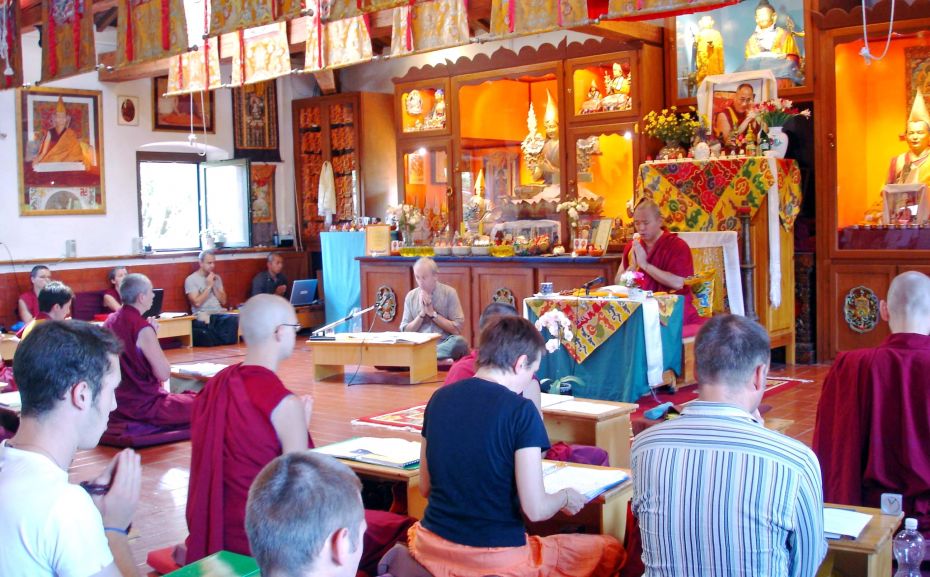
The FPMT Basic Program taught by Geshe Tenzin Tenphel at ILTK, Italy
The FPMT Basic Program in Centers
The FPMT Basic Program is taught by Tibetan geshes and qualified Western teachers. Study of the standard texts and commentaries is supported by discussions, meditations, reading and homework assignments, short retreats, etc.; each subject is completed with a test.
Students may enter the program at the beginning of subjects as indicated by individual centers. Students will benefit most from their BP studies if they have some familiarity with preparatory study and practice as offered by foundational-level programs.
Over the course of their engagement with the BP students must follow the BP Conduct and Practice Criteria: practicing to the best of their ability to refrain from killing, stealing, lying, sexual misconduct (adultery), and intoxicants, while developing awareness of positive and negative states of mind, and, in particular, the practice of patience and concern for others. A Practice and Conduct info sheet explaining the expected level of engagement with this practice is provided.
Upon fulfillment of the requirements set by the center, and having passed the test for a subject, the BP Completion Card, signed off for the completed subject, can be provided to students who leave the program before its conclusion. This facilitates completion at a later time. When at least the nine subjects of the core curriculum are completed, students may participate in the three-month BP review and final exam.
Three months of lamrim retreat complete the program. The retreat may be done before or after the final exam, but should preferably be done after studying Stages of the Path. Lama Zopa Rinpoche strongly encourages students to do the three-month retreat all at once, but if this is not possible, three separate months of lamrim retreat fulfill the requirement. Several centers are offering one- or three-month lamrim retreats as part of their BP.
The BP Completion Certificate. is awarded upon completion of the review, final exam, and retreat. BP graduates serve in various roles that support FPMT centers and education programs, by offering introductory level courses, as BP teaching assistants, or as tutors for BP Online for example. Graduates are eligible to enter the FPMT teacher registration process; as registered teachers they teach foundational level FPMT education programs and FPMT Basic Program subjects in FPMT centers upon invitation.
FPMT Education Services provides assistance with offering the program at various levels and in formats suitable for different center situations, Centers wishing to host the FPMT Basic Program will find detailed information in the Guidelines for Implementation, available for download from the BP materials webpage, A separate overview wth subject descriptions, and a listing of the BP standard texts and commentaries are also available. The texts and commentaries are provided both in Tibetan and in translation in various languages, and examples of course materials can be downloaded here as well. For more information, please contact the FPMT Basic Program coordinator.

FPMT Basic Program Online
The BP subjects are offered online for those unable to attend the program in an FPMT center. All elements to complete the program are also available online.
The FPMT Online Learning Center offers BP Online by means of video and audio recordings of outstanding BP teachers . The teachings are supplemented by study materials, discussion forums monitored by qualified Western teachers, guided meditations, and retreats. While recommended schedules are provided, students can study at their own pace. Access to individual subjects is available through The Foundation Store.
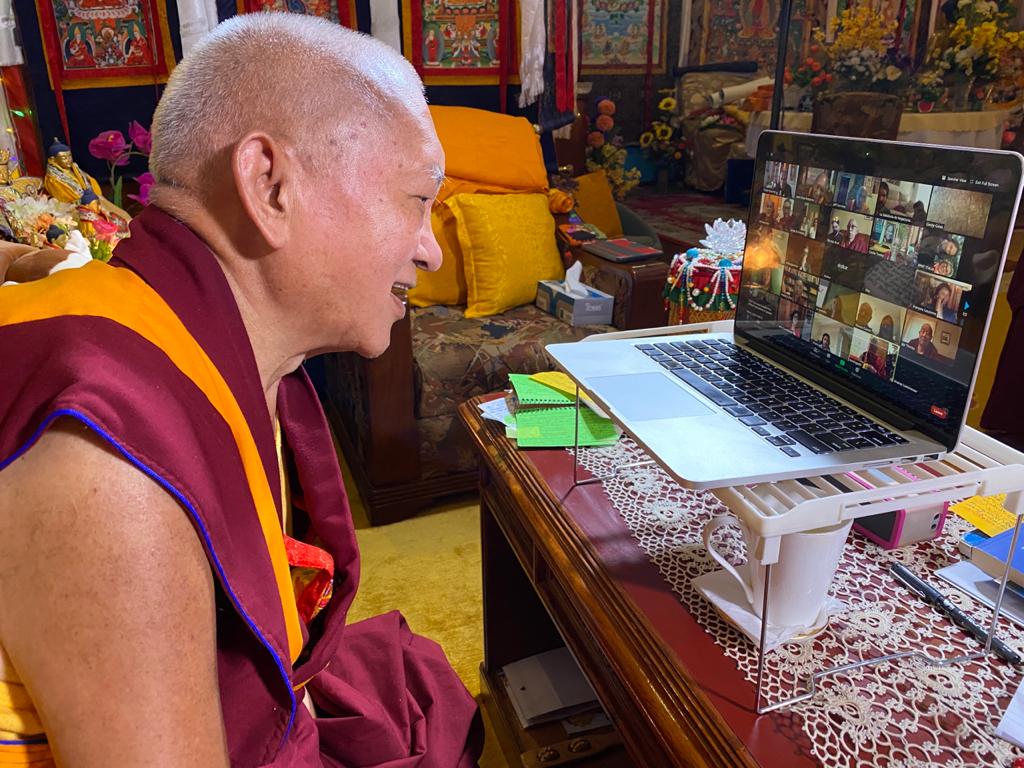
In sync with their center based FPMT Basic Programs, Jamyang Buddhist Centre Leeds, and Jamyang Buddist Centre London, UK, Losang Dragpa Centre in Malaysia, Nalanda Monastery in France and Istituto Lama Tzong Khapa in Italy offer BP Online in real time, including the program completion option.
Students engaging with BP Online at the FPMT Online Learning center can choose to what extent they wish to follow the recommendations regarding program completion. Students may complete any number of subjects and in any order they wish. Recommendations for determining the order of study can be found in the Introduction to BP Online at the FPMT Online Learning Center. Additional details of the program such as completion requirements and suggested prerequisite studies are also presented there.
Students are encouraged to consider engaging in all components of the program, including the BP Conduct and Practice Criteria designed by Lama Zopa Rinpoche, at least two half-hour lamrim meditations per week; the subject completion tests and subject-related short retreats, and the one-month lamrim retreat and three-month review and final exam that complete the program.
For students to have the most benefit from their participation in BP Online, experience with Dharma study and meditation practice, and skill in doing individual retreat are needed. Additional requirements apply for the tantra subjects. Please check the preparatory study and practice page to decide if the program is right for you!
To fulfill the retreat requirement for program completion, BP Online students can participate in any of the one-month lamrim retreats that are offered by centers in several regions. For individual one-month lamrim retreats, Retreat Guidelines and Support Materials are provided on the FPMT Online Learning Center.
Upon successful completion of the BP subjects, the three-month review and final exam and the one-month lamrim retreat, students are awarded the BP Homestudy Completion Certificate. Graduates of BP Online, while not eligible for FPMT teacher registration, may be invited to offer introductory level courses and can serve in roles that support the implementation of the FPMT education programs, for example, as program coordinators, teaching assistants, or as tutors for online programs.
I’m finding the Mahayana Mind Training a pretty earth-moving subject. This is a brilliant example of Dharma as a mirror and it is giving me plenty to work on. Venerable George’s commentary is crystal clear and his teaching style is very effective. I highly recommend this package.
–BP Online student
The FPMT Basic Program Subjects
The BP curriculum was designed by Lama Zopa Rinpoche to ensure that students who want to study beyond the foundational level will gain a profound knowledge of the key aspects of the entire Buddhist path.
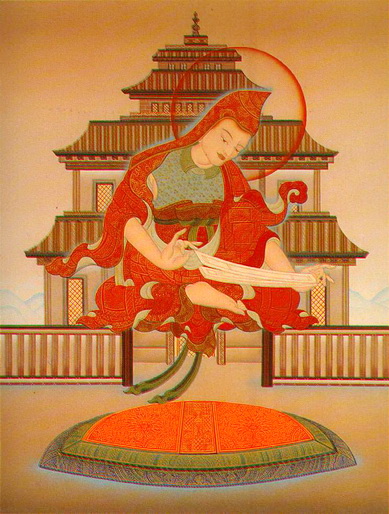
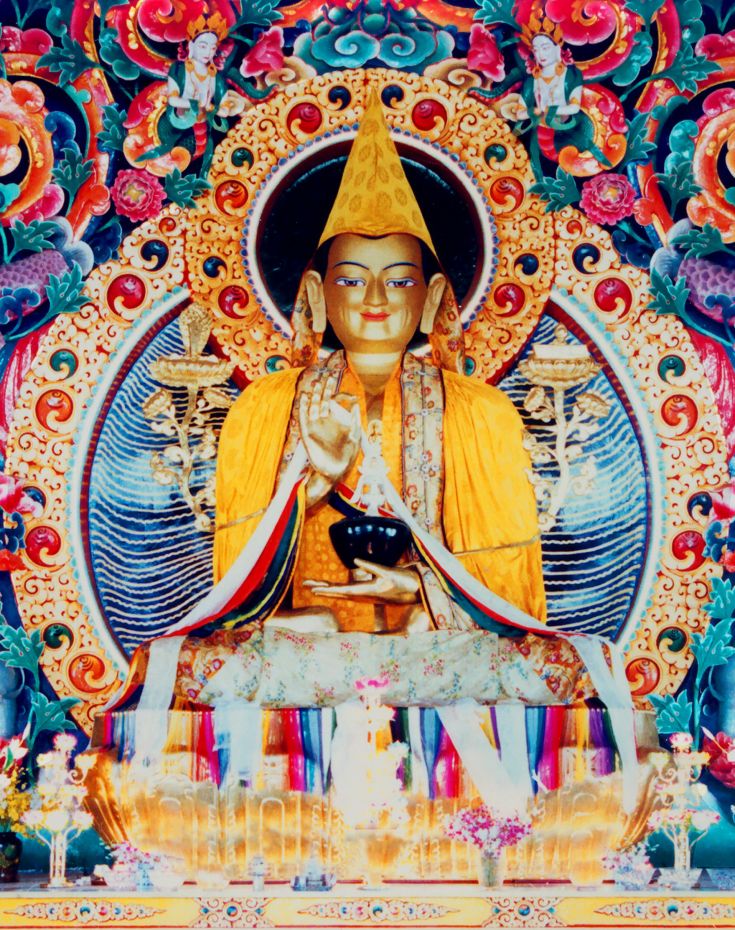
Shantideva teaching Engaging in the Bodhisattva Deeds
The BP curriculum includes the study of:
- Stages of the Path: the stages of the path to enlightenment of beings of low, middling, and great capacity
- Heart Sutra: emptiness and the phenomena qualified by it
- Mahayana Mind Training: Wheel of Sharp Weapons: the law of actions and results, or karma, and the states of mind that shape our future experiences
- Engaging in the Bodhisattva Deeds: the six perfections—generosity, morality, patience, joyous effort, concentration, and wisdom—and how to practice them in everyday life
- Mind and Cognition: the way the mind knows phenomena and the mental factors that constitute the basis of our daily experience
- Tenets: the philosophical systems, or tenets, of the four main schools of ancient Buddhist thought
- Ornament for Clear Realization and Seventy Topics: the 173 aspects of the omniscient mind and the practices that enable to achieve them
- The Tathagata Essence: the buddha lineage or tathagata essence that exists within every sentient being
- Grounds and Paths of Secret Mantra: the four classes of tantra with emphasis on the generation and completion stages of highest yoga tantra
- The Three Basic Bodies – Death, Intermediate State and Rebirth;
- and a Highest Yoga Tantra Commentary:
While the subjects may be studied in any order, it is good to keep in mind that an understanding of Mind and Cognition and Tenets will help with the ninth chapter of Engaging in the Bodhisattva Deeds and with the Calm Abiding and Special Insight sections (the last part) of Stages of the Path.
Stages of the Path provides the overall context for the other subjects and for meditation practice throughout. Ornament for Clear Realization and Seventy Topics will be difficult without studying the preceding subjects first.
The tantra subjects should not be attempted without a good overall understanding of the stages of the path and require familiarity with and commitment to practice.
Centers Offering the FPMT Basic Program
Australia | Colombia | France | Germany | Italy | Mexico | Malaysia | New Zealand | | Russia | Spain | United Kingdom | United States
Australia
Chenrezig Institute, Eudlo, Queensland
Colombia
Centro Yamantaka, Bogota
France
Institut Vajra Yogini, Southern France
Centre Kalachakra Paris
Nalanda Monastery, Southern France
Germany
Aryatara Institute, Munich
Italy
Istituto Lama Tzong Khapa, Pomaia, Tuscany
Centro Muni Gyana, Palermo,
Mexico
Khamlungpa Center, Guadalajara
Malaysia
Losang Dragpa Centre, Selangor
New Zealand
Chandrakirti Meditation Centre, Nelson
Dorje Chang Institute, Auckland
Spain
Nagarjuna C.E.T. Valencia, Valencia
Centro La Sabiduria de Nagarjuna, Bilbao
United Kingdom
Jamyang Buddhist Centre London
Jamyang Buddhist Centre Leeds
United States
Guhyasamaja Center, Virginia
Thubten Norbu Ling, Santa Fe, New Mexico
Tse Chen Ling, San Francisco, California